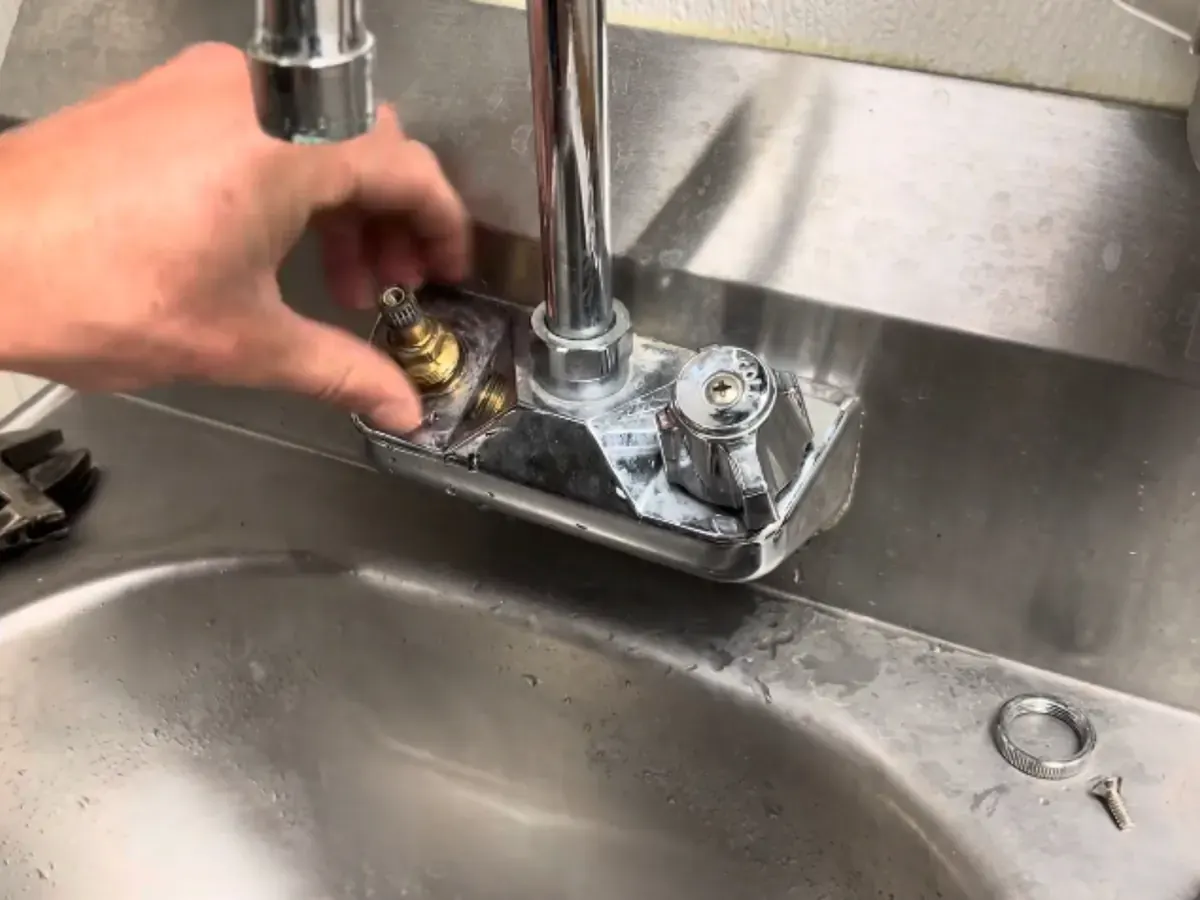
Faucet repair in El Mirage, AZ means finding why a tap, tub spout, shower valve or the shutoff under the sink drips, sprays, sticks or will not turn off, then fixing that part or replacing the fixture. If water will not stop and you cannot close the valve, shut the main and call the 24/7 line.
A faucet is a simple device with a few moving parts, so the fix is often short. The harder question is usually whether the valve behind the wall or under the sink is still good, because a worn shutoff turns a ten-minute job into a leak.
Below is how each kind of faucet problem usually plays out, what the plumber checks first, and when a new fixture is the better choice. If a pipe has split, go to burst pipe repair instead.
When a faucet or valve problem is an emergency
A supply valve that has snapped, a shower valve that keeps running when the handle is off, or a faucet stem that blows out under pressure can put a lot of water into a home quickly. These are after-hours calls, not morning ones.
The goal while you wait is to stop the water at the nearest working shutoff. If the fixture shutoff fails, the next step is the main valve for the house, usually near the water meter or where the line enters the home.
- Turn the fixture shutoff clockwise. If it spins freely or leaks, leave it alone and move to the main.
- Find the main shutoff valve for the house and close it fully, then open a tap to relieve pressure.
- Switch off power to anything wet, and do not stand in water near outlets.
- Use towels and a bucket to hold the water away from cabinets and flooring.
- Call the 24/7 line and tell the dispatcher which fixture it is and whether the main is closed.
A faucet that drips, sprays or runs when it should be off
Most kitchen and bathroom faucets fail in a handful of ways. Matching yours to one of these saves time.
Drip from the spout
Usually a worn cartridge, washer or seat. The part inside no longer closes against the water.
Water at the base of the handle
A worn seal around the stem or cartridge. It leaks under the handle rather than out the spout.
Weak or spraying flow
A clogged aerator or mineral buildup inside the faucet body. Hard water makes this common.
Handle stiff or loose
Scale on the cartridge, or a set screw that has worked itself loose.
Water under the sink
A leak at a supply line, a shutoff valve or a connection under the faucet, not the faucet itself.
Supply valve that is broken, stuck or will not shut off
The small valves under sinks and behind toilets are often forgotten until the day they are needed. A valve that has not been turned in years can seize, drip from its stem, or break when you try it. Those valves are how you stop a leak, so a bad one is a real problem.
If a valve breaks off in your hand and water is flowing, close the main, then call. Do not wrap it with tape and hope. The plumber will replace the valve and, if the supply line looks old, usually the supply line too.
Ask the plumber to test every shutoff in the house while they are there. A valve that closes only part way is worth replacing before the next emergency, not after.
Shower valve, tub faucet and showerhead problems
A shower that drips after you turn it off, a tub spout that sprays from the diverter, or temperature that swings are all signs the shower valve cartridge is wearing out. Valves sit inside the wall, so the plumber removes the handle and trim first to reach the cartridge. If the valve body behind the wall is damaged, the repair means opening the wall.
A showerhead with weak or crooked spray is usually scale in the nozzles. Soaking it in vinegar often helps, and if not, a new head is cheap. A tub or shower that drains slowly is a different problem, usually hair and soap in the drain, and belongs with drain cleaning.
Which fixture problem points to which part
Use this to get a rough idea of what the plumber is likely to replace.
| Where it fails | Typical cause | Usual repair | Repair or replace the whole fixture |
|---|---|---|---|
| Kitchen or bath sink spout drips. | Worn cartridge or seats. | New cartridge or seat kit. | Repair if the faucet is sound and parts are available. |
| Sink handle leaks at the base. | Failed stem or O-ring seals. | Replace seals or cartridge. | Repair unless the body is corroded. |
| Shower valve drips after shutoff. | Worn cartridge or stops. | Replace the cartridge. | Repair, but the valve body may need work in the wall. |
| Tub spout leaks from the diverter. | Worn diverter or loose spout. | Replace the spout or diverter. | Usually repair |
| Shutoff valve under sink leaks. | Worn packing or seat. | Replace the valve. | Replace the valve, not the faucet. |
| Faucet body corroded or cracked. | Age, scale, impact. | No lasting repair. | Replace the fixture. |
Valve will not shut off?
Close the main, then call. A plumber can talk you through the steps while help is on the way.
How the plumber works through a faucet repair
The order matters, because a single fix on the wrong part leaves the leak running.
Confirm you can shut the water off
The plumber tests the fixture shutoff and, if it fails, closes the main before touching the faucet.
Find out whether it is the faucet or the plumbing under it
Dry surfaces, then watch where the first drop forms. Supply lines and shutoffs leak as often as the faucet does.
Identify the faucet type
Cartridge, ceramic disc and older washer styles use different parts, and some brands are hard to match.
Replace the failed part and clean the rest
Mineral buildup is cleaned from the aerator and body so the new part is not damaged by old scale.
Test under pressure
Handles are cycled and connections are checked for weeping before the plumber leaves.
When the whole faucet should go in the bin
Replacing a fixture is sometimes a better deal than another repair. Ask the plumber to compare both before work starts.
Fix it
- The faucet is solid and the finish is still good.
- Parts for it are easy to get.
- The leak came from one cartridge or seal.
- You are happy with the style.
Replace it
- The body is pitted, cracked or crusted with scale.
- The brand or model is discontinued.
- The faucet has leaked more than once in a short time.
- You are updating the sink or want a different spout height.
What hard water does to faucets in El Mirage
The city's 2024 water quality report lists hardness between 4 and 9 grains per gallon, with an average of 7. Over time, that mineral content crusts on aerators and valve seats, which is why many faucets here get stiff or spray sideways well before they fail outright.
A softener is one way to reduce this. See water softener and filtration if scale is a repeat problem.
A short checklist before the plumber arrives
- Know where your main shutoff is and that it turns freely.
- Clear the cabinet under the sink so the plumber can reach the valves.
- Take a photo of the faucet and note the brand if it is printed on the body.
- Keep the old faucet parts if you removed anything.
- Note when the drip started and whether it changes with hot or cold.
Quick answers on cartridges and outdoor spigots
Cartridge replacement is the most common faucet repair, and the plumber usually matches the part by brand and model. An outdoor spigot that drips is often a worn washer or packing, and one that leaks inside the wall when the hose is attached needs a plumber, since the water may be going behind the wall.
If your water bill has jumped, ask the plumber about leak detection if a visible faucet drip does not explain it.
What changes the cost of faucet repair
A cartridge and a broken shower valve in the wall are not the same job. Here is what moves the number.
Homeowners insurance usually covers sudden and accidental water damage, like a supply line that bursts. It typically does not cover the cost of a worn faucet or a slow leak that went on for months. Read your policy and ask your agent before you file.
Want a real number for your faucet or valve? Call the 24/7 line and describe it. (623) 301-9042
Frequently asked questions
Yes. The emergency line is answered 24/7, including weekends and holidays. If water cannot be stopped at the fixture, close the main and tell the dispatcher. Homes in nearby Peoria can use the same line.
Close the main water valve to the house, then call. A valve that will not close usually has a worn cartridge or a damaged body inside the wall. Do not keep forcing the handle, since that can damage the valve further.
The seat the washer presses against may be worn or scaled, so the new part still cannot seal. A worn cartridge in a modern faucet gives the same drip. The plumber can check the seat and cartridge together.
Slow drips are not an emergency, but they can rot a cabinet floor. If it leaks at the stem, replace it soon. If it sprays or will not close, treat it as urgent.
A drip outside is minor, but a leak inside the wall behind the hose bib is not. If you see water on the wall or floor inside when the spigot is used, stop using it and call.
If the faucet is solid and parts are available, repair is usually the better value. If it is corroded, has leaked repeatedly or you want a change, replacement can make sense. Ask the plumber to price both.
Question not answered here? Call (623) 301-9042
Sources and code notes
Code reference: El Mirage follows the 2018 International Plumbing Code (IPC) and the 2018 International Fuel Gas Code (IFGC). Ask the El Mirage building department which rules and permits apply to your job. Hardness figures come from the City of El Mirage 2024 water quality report.