
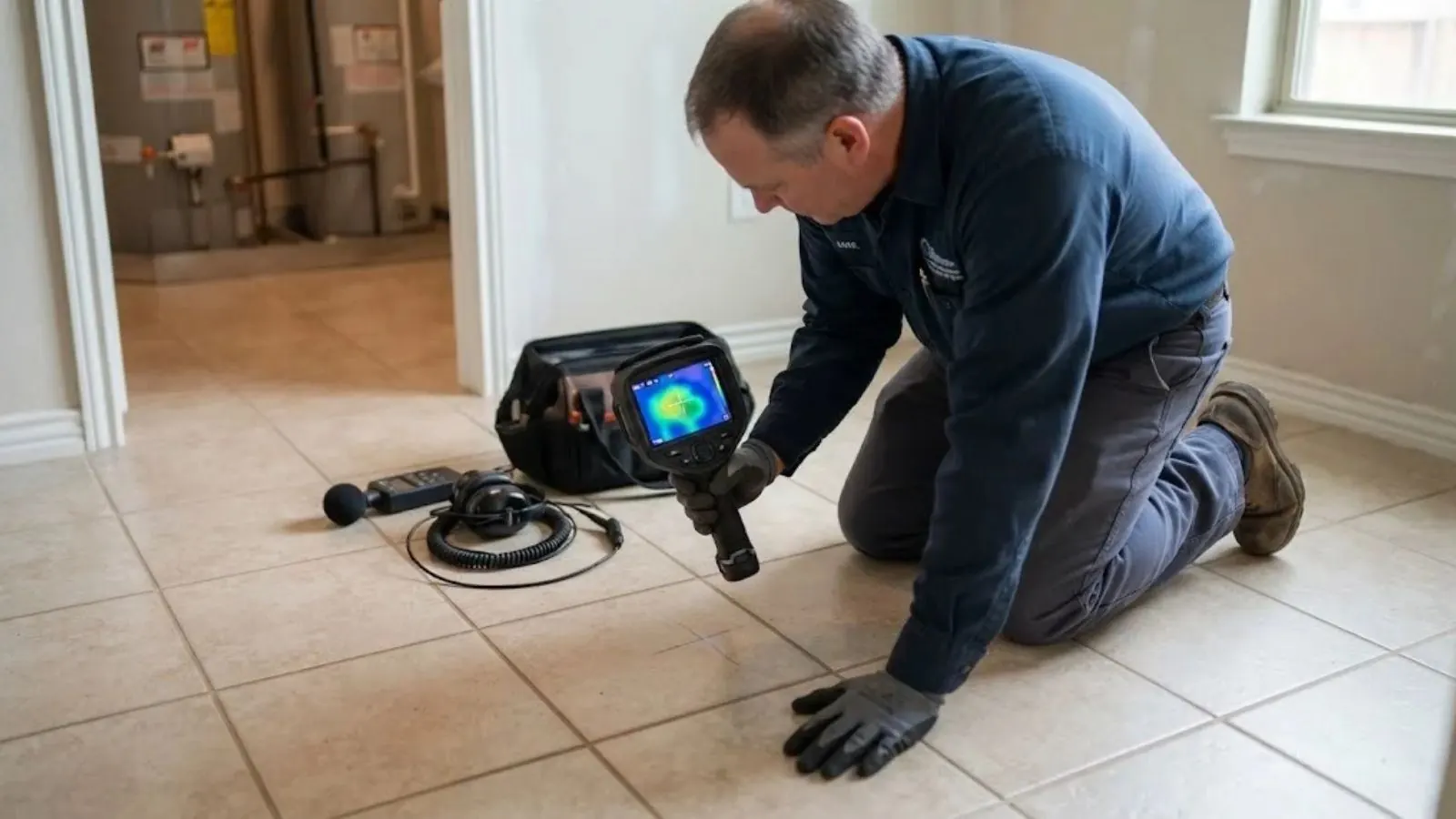
Leak detection in El Mirage, AZ is the work of finding where water is escaping from a pipe you cannot see, before anyone cuts into a wall or digs up a yard. If water is actively coming through a ceiling or soaking a floor, shut off the main valve and call our 24/7 line while you wait.
Most hidden leaks give hints long before they cause damage. The meter keeps moving, the bill creeps up, or a patch of floor feels warm. A plumber can use that evidence to narrow the search, then confirm the spot with the right method instead of guessing.
This page walks through the checks you can do yourself, the methods a plumber uses, and what each one can and cannot tell you. If the leak turns out to be under the concrete, see slab leak repair. If it is in the yard line, water line repair covers the fix.
When a hidden leak cannot wait
Water coming through a ceiling, a bulging wall, or a floor that is wet with no visible source needs attention right away. Water and electricity do not mix, and a soaked ceiling can fall without warning.
- Shut off the main water valve, usually at the house or at the meter box.
- Switch off power to wet rooms at the breaker if you can reach it dry. If you cannot, stay out and call.
- Move furniture and rugs off the wet area and place a bucket under any drip.
- Take photos of the damage for your insurance claim before you clean up.
- Call the 24/7 line and describe where the water appears and when you noticed it.
Is the meter still running with everything off?
This two-minute test tells you whether water is leaving the house when nobody is using it. It will not tell you where, but a yes means the search is worth starting.
Stop all water use
Turn off faucets, the ice maker, the dishwasher, and the washing machine. Skip flushing toilets.
Find the meter
It is usually in a ground-level box near the street. Lift the lid carefully and look for spiders first.
Read the leak indicator
Many meters have a small triangle or dial that spins when any water flows. Note whether it moves.
Write down the numbers
Record the dial reading, wait 30 minutes with no water use, then read it again.
Compare
If the numbers changed, water is going somewhere. Call and tell the plumber what you saw.
Why did my water bill jump?
A bill that climbs with no change in habits usually has one of four causes. A running toilet, a leak between the meter and the house, a leak inside the walls or slab, or an irrigation line that broke open. The meter test above helps you rule in or out a hidden leak. A toilet flapper that sticks open can waste a lot of water without making any noise.
Billing mistakes happen too. In 2023 the city looked into inaccurate meter readings in one billing cycle that raised bills for a small number of customers. If your bill spikes, check for a leak and also ask city customer service to verify the meter read.
Keep in mind that a bill only shows the total. It cannot tell you which pipe is leaking. That takes a plumber on site.
Stains on the ceiling and damp walls
A brown ring on the ceiling is a clue, not an address. Water travels along framing and pipes before it drips, so the stain can sit several feet from the real source. Common sources above a ceiling include a supply line, a drain joint, an air conditioner condensate line, or a roof leak.
That last one matters, because a roof leak is not a plumbing problem. A plumber will check whether the stain grows when no water is in use, and whether it appears only after rain. Monsoon season runs June 15 to September 30, so a stain that shows up after a storm may point to the roof instead of the pipes.
For walls, the plumber looks for paint that bubbles, baseboards that swell, and a musty smell near a bathroom or kitchen. A moisture meter and a thermal camera can show wet drywall without opening it. Neither tool sees through every material, so the plumber may still make a small inspection opening to confirm.
Methods plumbers use, and honest limits
No single tool finds every leak. A good plumber matches the method to the symptom and tells you when a result is only a strong hint.
| Method | What it finds | What it cannot tell you |
|---|---|---|
| Meter and pressure test. | Whether the supply side is losing water. | Where the loss is. |
| Acoustic listening | The hiss or hum of water escaping under pressure. | Anything in noisy surroundings or on plastic pipe that carries sound poorly. |
| Thermal imaging | Temperature changes from hot-line leaks or wet materials. | Cold-water leaks in warm slabs and shallow readings through thick finishes. |
| Moisture meter | Dampness in drywall, wood, and baseboards. | Whether the water is from a pipe, the roof, or condensation. |
| Tracer gas | Tiny leaks in a pipe that has been isolated and filled. | Leaks in lines that cannot be sealed off first. |
| Video camera | Cracks and breaks inside drain lines. | Pressurized supply pipe, which is not camera accessible. |
Meter moving with every tap off?
Write down the reading and the time, shut the main valve, and call. A plumber can tell you what to do next and book a visit.
A note on slab-on-grade homes
Homes in El Mirage mostly date from the 2000s boom, and the median home was built around 2004 according to Census-based data. Many homes in the Phoenix area sit on concrete slabs with no crawlspace. Whether yours has pipes under the slab depends on how it was built, so ask the plumber to confirm.
If the supply lines run through or under concrete, a warm spot on the floor or the sound of running water at night can point to a slab leak. The fix is a separate job, covered on the slab leak repair page.
Underground lines between the meter and the house
The yard line is the pipe that carries water from the city meter to your home. A break there may show as a soft patch of ground, a patch of greener grass, or a meter that runs while the house is dry. In dry desert soil, a wet spot with no rain or sprinkler nearby is worth a call.
Pinpointing a buried leak usually combines the meter test, a listening device on the line, and sometimes tracer gas. Each narrows the search to a few feet. None reaches the exact spot with total certainty, so the plumber typically confirms by exposing the pipe.
Before any digging, Arizona law requires you to contact Arizona 811. The service is free, and utilities have two full working days to mark their lines. Hand tools only within 24 inches of the marks.
Irrigation and sprinkler leaks
Many desert yards run on timed sprinkler and drip lines. A cracked valve, a chewed drip line, or a broken head can waste water every day without anyone noticing. Signs include a wet patch near a valve box, low pressure in one zone, or a bill that rises in the months you water.
The simplest test is to shut the irrigation supply valve and repeat the meter check. If the meter stops, the leak is on the irrigation side. If it keeps running, the leak is elsewhere. A plumber can often fix the supply line to the system, while an irrigation specialist may be a better fit for the heads and drip tubing.
Pool and spa water loss
A pool loses water to heat and evaporation every summer, so some drop is normal. A common home check is the bucket test, which compares the pool level to a bucket of water left on the steps over a day. If the pool drops more than the bucket, a leak is possible.
A plumber can test the supply and return lines to the pool, which are the plumbing side of the system. Leaks in the shell, skimmer, or pool equipment may need a pool specialist instead. Ask the plumber what they can and cannot test before you book.
What to do first when you suspect a leak
These steps cost nothing and make the plumber's visit faster.
- Run the meter test and write down both readings and the time between them.
- Check every toilet by dropping food coloring in the tank and waiting without flushing.
- Look under sinks and around the water heater for damp cabinets or puddles.
- Feel the floor for warm spots and listen at night for faint running water.
- Note when the bill began to rise, and compare it to the same month last year.
- Take dated photos of any stains so you can show whether they are growing.
When a leak is not worth chasing
A very small leak in a pipe that is already near the end of its life may not be worth a long search. If a plumber finds that the same line has leaked more than once, repiping that section can cost less than repeated repairs. The plumber will explain the trade-off and show you the evidence before you decide.
Where the water bill adds up slowly and the pipe sits inside a finished wall, ask whether a targeted opening is enough. Opening a large area of drywall is rarely the first step.
What affects the price of leak detection
Leak detection pricing depends on how hard the leak is to reach and how many methods the search takes. A clear price comes before any work starts, and that number is based on what the plumber sees on site.
Homeowners insurance often covers sudden and accidental water damage, but not the cost of repairing a worn-out pipe. Some policies treat the cost of finding the leak differently from the damage it caused. Read your policy and ask your agent before you file.
Want a real number for your situation? Call the 24/7 line and describe what you have seen. (623) 301-9042
Frequently asked questions
Yes. The 24/7 line is answered around the clock, including weekends and holidays. If water is coming through a ceiling, shut off the main valve first, then call.
Do the meter test with every fixture off. If the dial or leak indicator moves, water is going somewhere. If it stays still, the higher bill may come from usage, irrigation timers, or a billing error.
Often yes, for the first step. Listening devices, thermal imaging, and moisture meters narrow the search from outside the wall. The plumber may still make a small opening to confirm the spot before repair.
It can happen. The city looked into inaccurate meter readings in 2023 for a small number of customers. Check for a leak first, then ask city customer service to verify the read.
A plumber can test the supply and return piping to the pool. Leaks in the shell or the pool equipment may need a pool specialist. Ask what is covered when you call.
Yes, before any digging on your property. Arizona 811 is free, and utilities have two full working days to mark their lines. The plumber can walk you through the request.
Yes. Homes next door in Youngtown and Surprise are served from the same dispatch line. See the Youngtown plumber page or the Surprise plumber page for details.
No. It can come from the roof, an air conditioner drain line, or a supply or drain pipe. The plumber checks whether it grows with no water in use and whether it follows rain, then points you to the right fix. See burst pipe repair if a pipe has failed.
Question not answered here? Call (623) 301-9042
Sources and code notes
Code reference: El Mirage follows the 2018 International Plumbing Code (IPC) and the 2018 International Fuel Gas Code (IFGC). Ask the El Mirage building department which rules and permits apply to your job. Dig-safety timing comes from Arizona 811, which the Arizona Corporation Commission oversees.