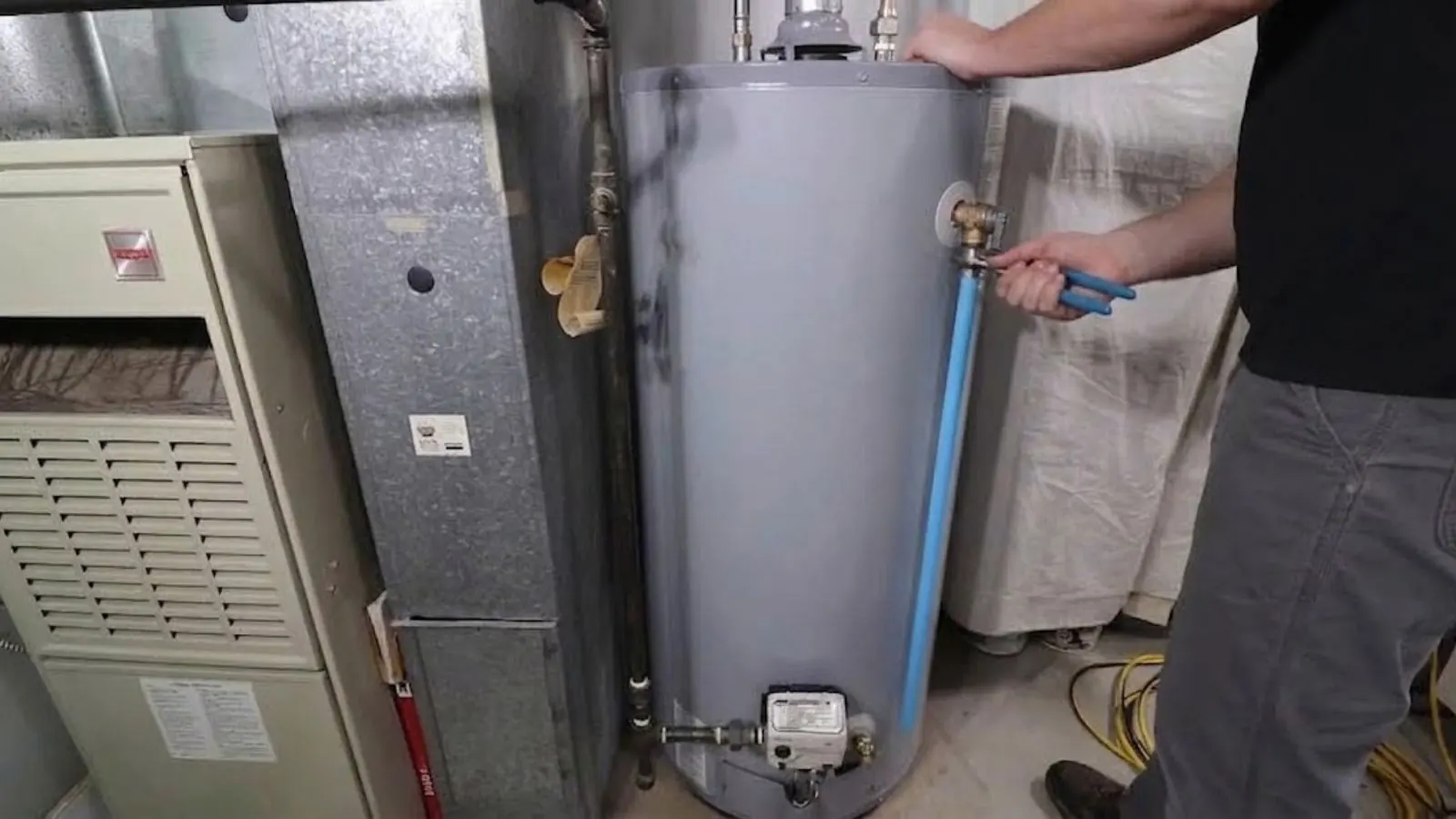
Water heater installation in El Mirage, AZ is the planned job of setting a new heater in a home or building, connecting it to water, gas or power, and venting it safely. The best time to do it is before an old tank fails, when you can choose the size and type without a flooded floor forcing the decision.
Most of the work and nearly all of the risk sits in the connections. Gas piping, flue venting, relief valve drainage, and shutoff valves matter more than the brand on the tank label.
If your heater has already failed and water is spreading, go to water heater replacement for the emergency steps instead. This page covers the unhurried version.
Gas smell? Leave first, then call
If you smell gas at any point before, during, or after an installation, do not search for the source and do not touch light switches or appliances. Leave the building right away and call the gas utility or 911 from outside.
Call a plumber only after the gas utility or emergency services say it is safe. No installer can promise a gas response time, and none should ask you to stay inside while they look.
From first call to hot water
Every home is different, but a planned install generally follows this path.
Look at the space
The plumber sees where the heater sits, what fuel it uses, and what the vent and drain look like now.
Pick the type and size
You choose between tank, tankless, or hybrid based on household size, fuel, and space.
Confirm permit needs
Ask the El Mirage building department whether the job needs a permit. Ask the plumber who handles that step.
Do the install
The plumber sets the unit, connects water, gas or power, vent, and relief valve drain, then fills and tests it.
Walk through the controls
You learn where the shutoffs are, how to set the temperature, and what a normal sound or smell is.
What the plumber checks on a new install
These are the points that separate a clean install from one that causes trouble later.
| Item | Why it matters | What to ask |
|---|---|---|
| Cold shutoff valve. | Lets you isolate the tank in an emergency. | Does it close fully, and is it easy to reach? |
| Gas supply and shutoff. | Gas units need a safe connection and a local shutoff. | Is the connection leak tested before the unit runs? |
| Vent or flue. | Exhaust gases must leave the building safely. | Does the vent slope and clearance suit this unit? |
| Relief valve and drain line. | The valve protects against over-pressure and over-temperature. | Where does the discharge pipe end? |
| Drain pan and floor. | A pan limits damage if the tank leaks later. | Is a pan needed at this location? |
| Water pressure | High pressure strains a tank and its fittings. | Is the pressure checked and is a regulator needed? |
| Electrical supply | Electric units need the correct circuit and breaker. | Does the existing circuit match the unit? |
Gas line and venting: the safety work
A gas water heater needs a gas supply, a shutoff within reach, and a flue that carries exhaust outdoors. If the vent is blocked, undersized, or poorly pitched, fumes can enter the home. That is why a vent is checked on every gas install, new or replacement.
The city adopted the 2018 International Fuel Gas Code, and a local amendment requires underground fuel gas piping to be buried at least 12 inches deep, or 18 inches for plastic piping. This matters if your project adds a new underground gas run, such as for a detached garage. Ask the El Mirage building department what applies to your job.
Before anyone digs for a new line, Arizona law requires a call to Arizona 811. It is free, and utilities have two full working days to mark their lines. Hand tools only within 24 inches of marks is the usual rule, so ask your plumber how they handle it.
Planning an upgrade?
Tell the plumber your fuel, tank size, and heater location, and you can get a plan before the old unit fails.
Choosing between tank and tankless
Both types heat water, but they suit different homes. Neither is the right answer for everyone.
Storage tank
- Lower upfront cost and simple parts.
- Holds a reserve, so it handles many taps at once until the tank runs low.
- Needs floor space and loses some heat while it stands.
- Scale builds on the tank floor in hard water, so it benefits from flushing.
Tankless
- Heats on demand and saves space.
- Often needs a larger gas line and a different vent than a tank.
- Needs regular descaling, especially with hardness near 7 grains per gallon.
- See the tankless water heater page for details.
Expansion tank and other add-ons: ask the plumber
When a water heater is fed through a check valve or a pressure regulator, heated water has nowhere to expand. The pressure can rise and make the relief valve drip. A thermal expansion tank is the usual fix.
Whether your home needs one depends on how your plumbing is set up, so ask the plumber. The same goes for drain pans, a sediment trap on the gas line, and mixing valves. Your installer should explain which items apply and why.
New construction and remodel installs
In a new build or a remodel, the heater location and its vent and drain are decided early. Getting these right before walls close avoids awkward pipe runs later. Share the fuel choice and the planned location with your plumber as soon as you have them.
For bigger scopes that also add fixtures and supply lines, see plumbing installation. It covers the wider piping work around the heater.
Install-day preparation list
- Decide on fuel, tank size, and whether you want tank or tankless.
- Clear the area around the old heater and the path to it.
- Locate the main water shutoff and show it to the plumber.
- Ask the plumber who will contact the building department about permits.
- Plan for a few hours without hot water on install day.
What shapes the cost of an installation
A clear price comes after the plumber sees the space. These are the factors that move it.
Homeowners insurance usually does not pay for a planned upgrade or replacement of a working heater. It may help with sudden water damage from a failure. Read your policy and ask your agent.
Ready for a real number? Call, describe your setup, and get a clear price before work starts. (623) 301-9042
Frequently asked questions
A straight swap of the same type often fits in part of a day. Fuel changes, new vents, or gas piping take longer. The plumber can give you a realistic window after seeing the space.
Sometimes. A heat pump unit needs the right electrical capacity and air space around it. Ask the plumber to check your panel and the location before you decide.
It depends on how your plumbing is set up. If your system has a check valve or regulator, heated water cannot flow back, and pressure may rise. Ask the plumber whether your home needs one.
Ask the El Mirage building department. The city sets permit rules, and this page does not state whether your job needs one.
Leave the building and call the gas utility or 911 first. Do not turn switches on or off. Call the plumber back only after you are told it is safe.
Ask before you buy. Some installers prefer to supply the unit so they can stand behind the whole job. If you already own one, share the model number early so the plumber can check fit and venting.
Yes. The service area includes Surprise and other neighboring towns. Permit rules vary by town, so ask the local building department.
Question not answered here? Call (623) 301-9042
Sources and code notes
Code reference: El Mirage follows the 2018 International Plumbing Code (IPC) and the 2018 International Fuel Gas Code (IFGC). Ask the El Mirage building department which rules and permits apply to your job. Hardness figures come from the City of El Mirage 2024 water quality report. Dig-safety timing comes from Arizona 811, which the Arizona Corporation Commission oversees.