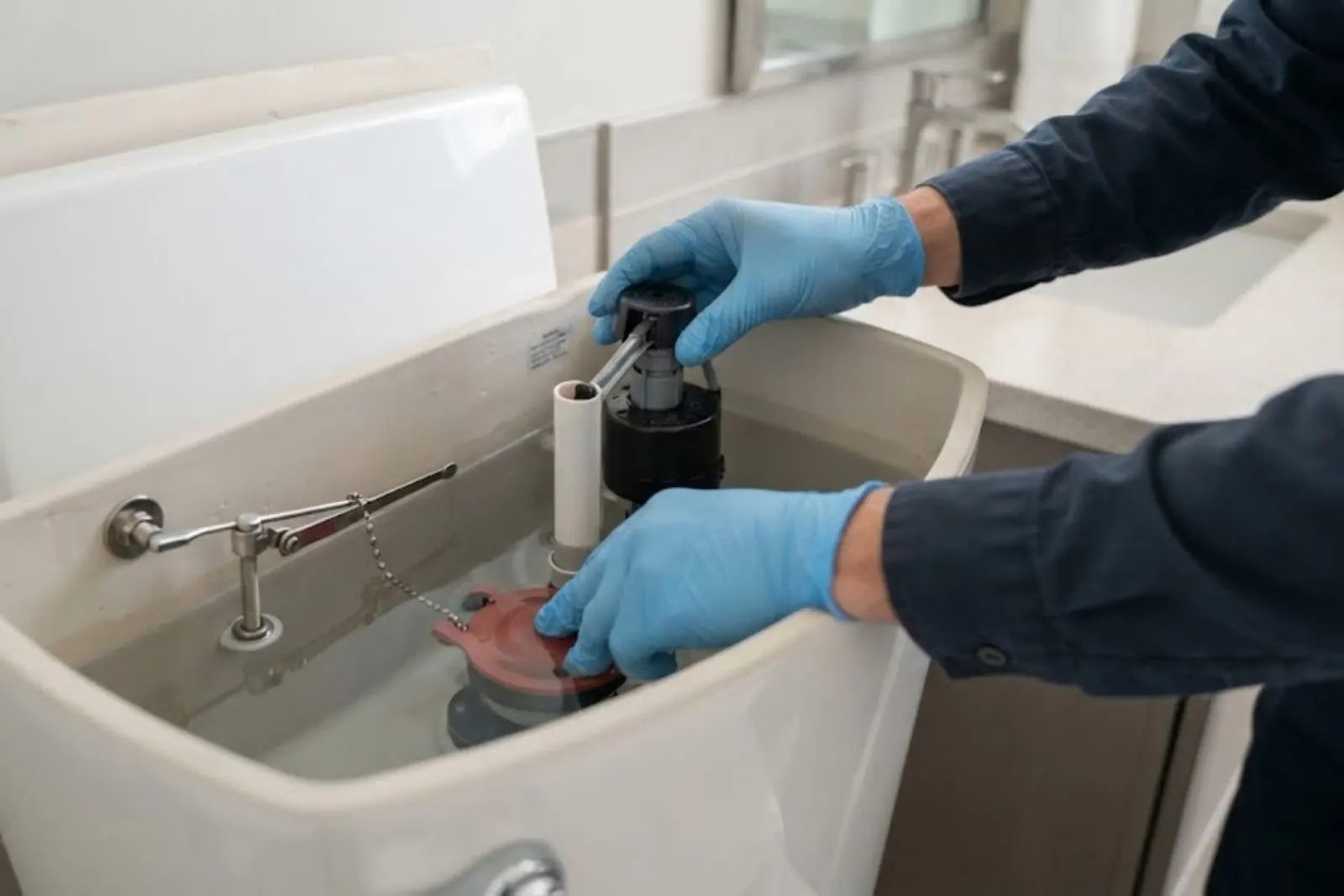
Toilet repair in El Mirage, AZ covers the fixes that keep a toilet flushing, filling, sealing to the floor and staying quiet. The line is open 24/7, so if water is spilling right now, turn the small valve behind the toilet clockwise until it stops, then call. Do not keep flushing to see if it clears.
Most toilet calls start small. A fill valve that hisses, a handle that must be held down, or a faint dampness around the base. Fixing the part early is usually a short visit, while a leaking seal left alone can soften the subfloor underneath.
This page walks through what each symptom usually means, how the plumber narrows it down, when a repair makes sense and when a new toilet is the better call. For a clog that sits deeper in the line, see drain cleaning.
When a toilet problem cannot wait for morning
A toilet that is overflowing, a base that leaks every time it flushes, or a tank that keeps filling and spilling onto the floor all justify an after-hours call. Water on a bathroom floor spreads to hallway flooring and walls faster than most people expect.
If sewage is coming up in the tub, the shower or a floor drain along with the toilet, the blockage is likely farther down the line, and it may be a sewer line cleaning job. That is a different problem and the plumber will want to hear about it on the first call.
- Close the small supply valve on the wall behind the toilet by turning it clockwise.
- If the bowl is rising, lift the tank lid and push the rubber flapper down, or lift the float to stop the refill.
- Put towels around the base and keep children and pets out of the room.
- Do not use a chemical drain product in a toilet that might need a plumber's tool, since it splashes back on whoever works on it.
- Call the 24/7 line and say whether the water is clean tank water or dirty bowl water.
Toilet symptoms and what they usually point to
Start with what you can see, hear or feel. This table matches the common complaints to the usual cause and what the plumber typically does about it.
| What you notice | Likely cause | What the plumber typically does |
|---|---|---|
| Water trickles into the bowl all day. | Worn flapper or a flush valve seat roughened by scale. | Replaces the flapper, or the whole flush valve if the seat is pitted. |
| Hissing from the tank after flushing. | Fill valve that no longer shuts off cleanly. | Replaces the fill valve and resets the water level. |
| Water seeps out around the base. | Failed wax ring or loose closet bolts. | Pulls the toilet, checks the flange, fits a new seal and resets it. |
| Tank sweats or drips on the floor. | Condensation, or a loose tank bolt washer. | Tightens or replaces the tank bolts and washers, checks the supply line. |
| Weak flush, bowl slow to empty. | Partial clog, clogged rim holes or a low tank level. | Clears the trap, checks rim jets and adjusts the fill height. |
| Handle sticks or must be held down. | Bent lever arm or a chain that is too long or short. | Replaces the handle assembly and adjusts the chain. |
| Toilet rocks side to side. | Loose bolts, or a flange sitting low or damaged. | Re-seats the toilet and repairs or replaces the flange if needed. |
Repair or install: choosing between fixing it and a new toilet
Many of the calls that begin as a repair end up as a replacement, and the reverse is just as common. The right answer depends on the age of the toilet, the cost of parts against a new unit, and whether the porcelain itself is sound.
Ask the plumber to explain the choice in plain terms before work starts. You are owed a clear price for either path.
Repair makes sense when
- The porcelain has no cracks and the glaze is intact.
- The problem is a single worn part such as a flapper, fill valve, handle or supply line.
- The toilet flushes well when the parts work.
- You like the height and shape of the current toilet.
A new toilet makes sense when
- You can see a hairline crack in the bowl or tank, or the tank leaks through the china.
- Parts keep failing one after another and the toilet clogs even when it is clean.
- The flush is weak and no adjustment improves it.
- You want a taller bowl, an elongated seat or a more water-saving model.
How the plumber finds where the water is really coming from
A wet floor near a toilet has more than one possible source, so a good visit starts with a short sequence of checks rather than a guess.
Dry everything and watch
The plumber wipes the base, supply line and tank dry, then flushes and watches where the first drop appears.
Test the supply side
The wall valve, supply line and tank connection are checked for weeping, since these leak with the toilet not in use.
Check the tank water level
A dye tablet in the tank, left for a short while, shows color in the bowl if the flapper is leaking.
Test the seal
Rocking the bowl gently and checking for movement or stains around the base points to a failing wax ring or loose bolts.
Pull and inspect if needed
If the base is leaking, the toilet comes up so the flange and subfloor can be checked before anything new goes down.
A toilet that runs or leaks inside the tank
A running toilet is quiet money going down the drain. The flapper or fill valve is not sealing, so the tank keeps topping up and the water bill creeps up with nothing visibly wrong. If your bill has risen and you have not changed how you use water, a toilet running is one of the first fixtures to rule out before you pay for leak detection elsewhere in the house.
The dye test above is something you can do yourself. If color shows in the bowl without a flush, the flapper is leaking. If the sound is a hiss and the tank water reaches the top of the overflow tube, the fill valve is the likely culprit.
The city's 2024 water quality report lists hardness between 4 and 9 grains per gallon with an average of 7. Mineral scale can build on rubber seals and valve seats over the years, so older parts often fail by leaking slowly rather than all at once.
Toilet leaking or running right now?
Shut the valve behind it, put a towel down, and call. A plumber can help you tell a quick part swap from a bigger job.
What to try before you call, and what to leave alone
A few simple checks save some visits. A few others make the problem worse.
- Check that the chain has a little slack and is not caught under the flapper.
- Look at the water level against the fill line marked inside the tank.
- Try a plunger with a good seal for a slow bowl, using slow firm strokes.
- Do not tighten closet bolts hard, because porcelain cracks under uneven pressure.
- Do not pour boiling water into a toilet, since it can crack the bowl.
- Do not keep flushing an overflowing toilet, which sends more water onto the floor.
Wax rings, fill valves and supply valves, quick answers
A wax ring seals the toilet to the drain flange and keeps sewer gas and water out. It does not wear out on a schedule, but it fails if the toilet has ever been moved or rocks on the floor.
The fill valve controls how the tank refills. The supply valve on the wall is the shutoff you use in an emergency, so a valve that is stuck or weeping should be replaced.
When the toilet itself is the problem and needs to be replaced
Replacing a toilet is a larger job than a repair, and the plumber should talk through the options with you first.
Cracked porcelain
A crack in the bowl or tank cannot be repaired reliably. Water will find it again.
Rough-in distance
The distance from the wall to the drain decides which models fit. Ask the plumber to confirm it before you buy one.
Bowl shape and height
Elongated and taller bowls are easier for many people. Measure the space and think about who uses the bathroom.
Flange condition
A damaged or low flange should be repaired during the swap, or the new seal may fail early.
Subfloor check
If the floor around the old toilet is soft, it needs attention before a new one is set.
Plain answers about toilets in El Mirage homes
According to Census-based data, the median home in El Mirage was built around 2004, so many toilets are now old enough for their internal parts to be worn. Pipe material and slab details for individual homes are not something to assume, so ask the plumber to confirm what is behind your bathroom wall.
If you rent, tell the owner before arranging a repair, since lease terms differ on who arranges plumbing. Neighbors in Youngtown and Surprise can call the same line.
What decides the price of a toilet repair
A flapper swap and a full toilet replacement are very different jobs. These are the real factors behind the number you will be given.
Homeowners insurance usually covers sudden and accidental water damage, such as a supply line that bursts, but not the cost of replacing a worn toilet or damage from a slow leak that went on for months. Read your policy and ask your agent before you file.
Want a real number for your toilet? Call the 24/7 line and describe what you see. (623) 301-9042
Frequently asked questions
Yes. The emergency line is answered 24/7, including nights, weekends and holidays. Tell the dispatcher whether the water is spilling now and whether you have shut the wall valve.
A flapper that does not seal lets tank water slip into the bowl, and the fill valve then tops it up. It is often called a phantom flush. Replacing the flapper or the fill valve normally stops it.
Not by itself, but it should be fixed soon. A rocking toilet breaks the seal, and water that seeps out under it can rot the floor below. Stop using it if you see any water at the base.
A fill valve is a common homeowner job. A wax ring means lifting a heavy fixture and re-seating it, and a stuck supply valve can start a leak that is hard to stop. If the shutoff does not close fully, call before you open anything.
Dry the outside of the toilet, add a few drops of food coloring to the tank, and wait. Colored water at the base means the leak is on the seal. Clear water that appears elsewhere points to a supply line, tank bolt or sweating tank.
It can if your old one runs or uses more water per flush than newer models. A running toilet is often the cheaper fix. The plumber can tell you which situation you have after a short look.
Question not answered here? Call (623) 301-9042
Sources and code notes
Code reference: El Mirage follows the 2018 International Plumbing Code (IPC) and the 2018 International Fuel Gas Code (IFGC). Ask the El Mirage building department which rules and permits apply to your job. Hardness figures come from the City of El Mirage 2024 water quality report.