Water heater repair in El Mirage, AZ means finding out why a tank has stopped heating or started leaking, then fixing the part that failed or telling you honestly that the tank is finished. The 24/7 emergency line is open if water is on the floor right now. Shut the cold supply valve above the tank and keep reading while you wait.
Most calls fall into two groups. Either the water is lukewarm or cold, which is usually a heating part, or there is a puddle, which is sometimes a cheap fitting and sometimes the tank shell itself. The two look alike from the doorway and need very different answers.
This page walks through what each symptom usually means, how a gas unit differs from an electric one, and when a repair makes sense. If the tank is old and leaking from the body, replacing the heater is often the better use of your money.
When a leaking or dead water heater is an emergency
Water spreading across a floor, a tank that is hissing or rumbling hard, or any smell of gas near the heater should be treated as urgent at any hour. A tank holds a lot of water, and a failed one can empty onto flooring in a short time.
If you smell gas, do not touch switches or look for the source. Leave the building and call the gas utility or 911 first, then call a plumber from outside.
- Close the cold water shutoff on the pipe above the tank. The handle usually turns a quarter turn or several full turns.
- For an electric heater, switch off its breaker. For a gas heater with no gas smell, turn the gas control to pilot or off.
- Move boxes and stored items away from the water, and keep people off wet floors near outlets.
- Call the 24/7 line and describe where the water is coming from, if you can see it.
Reading the problem: what you see and what it usually means
Start with what you can observe. This table covers the symptoms homeowners describe most often and the usual cause behind each. A plumber confirms the cause before quoting anything.
| What you notice | Usual cause | What the plumber typically does |
|---|---|---|
| Water pooled around the base. | Loose fitting, failed valve, or a split tank shell. | Traces the water upward to its first source and checks the shell. |
| Dripping pipe from the side of the tank. | Temperature and pressure relief valve discharging. | Checks the water pressure and the valve before touching the tank. |
| No hot water at all, electric. | Tripped breaker, failed element, or bad thermostat. | Tests power, then tests each element and thermostat. |
| No hot water at all, gas. | Pilot or igniter trouble, or a faulty thermocouple. | Checks gas supply, ignition, and the flame sensor. |
| Hot water runs out fast. | Sediment on the bottom or a failed lower element. | Flushes the tank or tests the lower heating part. |
| Rumbling or popping noises. | Scale and sediment trapped under the burner or element. | Flushes the tank and judges how much buildup remains. |
| Rusty or brown hot water only. | Corrosion inside an aging tank. | Tests the cold side, then checks the anode rod and tank age. |
A puddle at the tank: leak at a fitting or the tank itself
Where the water leaves matters more than how much there is. A weeping connection on the cold inlet or hot outlet, a drain valve that drips, or a relief valve that has opened can all be fixed without replacing the tank. These repairs are usually short and the heater keeps its remaining life.
A leak from the body of the tank is different. Steel tanks are lined with glass, and once the lining and steel give way, the shell seeps from inside. No patch or sealant holds a pressurized tank, and a plumber who says otherwise is selling you a short delay.
Water can also run along a pipe and drip somewhere else, which makes a fitting leak look like a tank leak. The plumber will dry the tank and fittings and watch where the first bead forms. If the shell is the source, the honest advice is to shut it down and plan the swap. See planned water heater installation if you have time to choose a unit instead of rushing.
A slow leak can also reach a slab or wall before you see it. If you find damp flooring away from the tank, leak detection can tell you whether the heater is the source or only the nearest wet spot.
No hot water: gas versus electric
The fuel type decides which parts can fail, so the first question on a no-hot-water call is gas or electric. Neither type is more reliable in general. They simply fail in different places.
Gas tank heaters
- Common faults are a pilot that will not stay lit, a dirty burner, a worn thermocouple, or a failed gas control valve.
- The plumber checks that gas is reaching the unit and that the flue is drawing before any repair.
- Any gas smell means leave the building and call the gas utility or 911 before anyone calls a plumber.
- A new gas control valve can approach the cost of a discount tank, so age matters in the repair decision.
Electric tank heaters
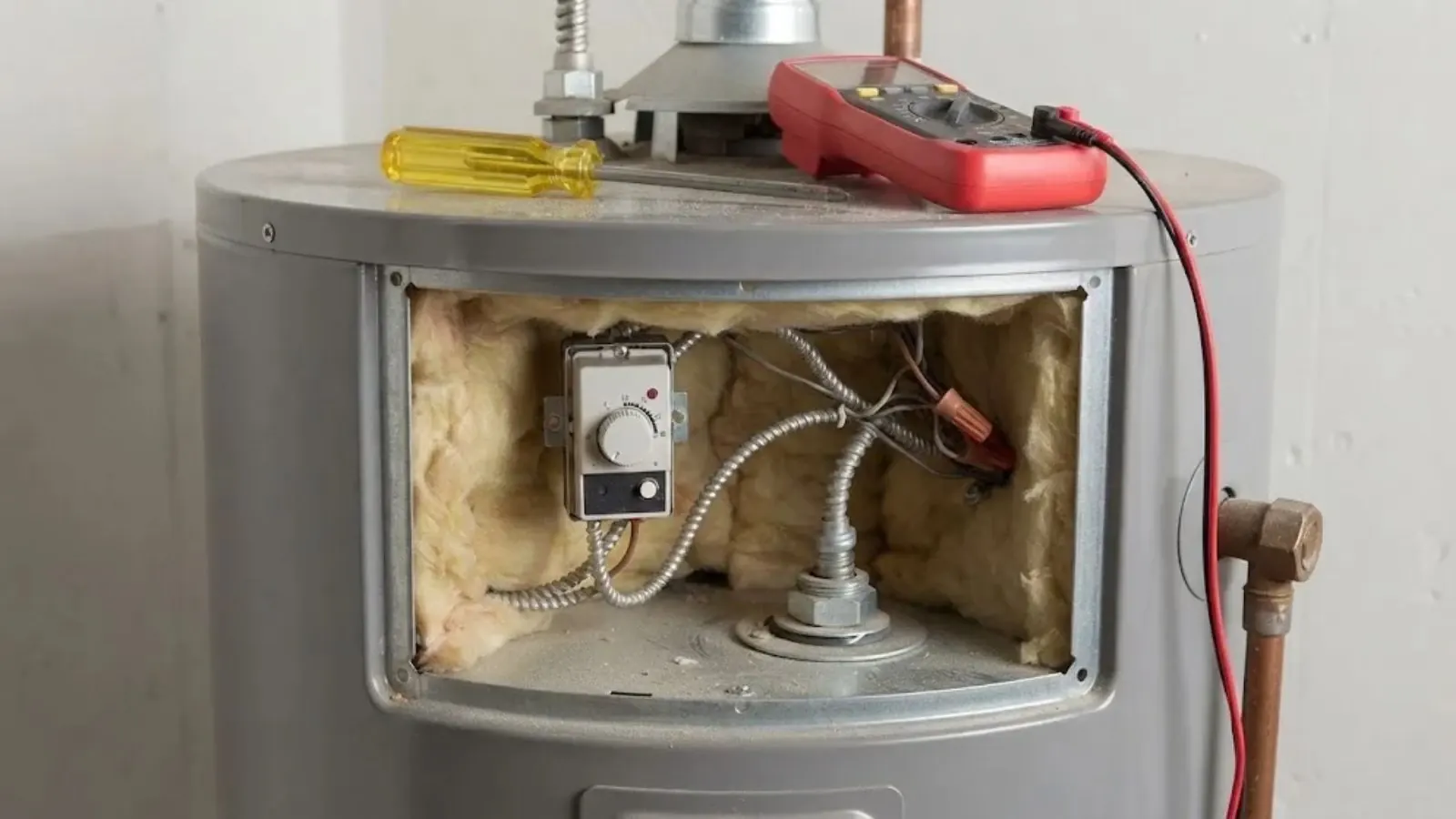
- Common faults are a tripped breaker, a failed upper or lower element, or a bad thermostat or high limit switch.
- The plumber tests power and each part with a meter, which pins the fault down quickly.
- Elements and thermostats are inexpensive parts, so repair usually makes sense on a tank that is otherwise sound.
- Never open the access panel with the breaker on. Water and live wiring are a bad mix.
Hybrid heat pump units
Some homes have a hybrid electric heater that pulls heat from the surrounding air. These add a fan, a compressor, and condensate drainage to the usual tank parts. Ask the plumber whether the repair is within what the company services, since some hybrid faults go back to the manufacturer.
If a hybrid unit shows an error code, write it down before you call. The code narrows the fault much faster than a description of the symptoms.
Tank leaking or cold shower?
Shut the cold supply, kill the power or gas control, and call. A licensed plumber can sort repair from replacement over the phone.
What 7 grains per gallon does inside a tank
The city's 2024 water quality report lists groundwater hardness from 4 to 9 grains per gallon, with an average of 7. Check the latest report for current numbers.
Water at that hardness typically leaves scale on heating elements and on the tank floor over the years. Scale makes elements work harder and burners heat through a layer of sediment, which is a common reason tanks get noisy and run out of hot water sooner. A yearly flush slows the buildup, and a softener or conditioning system reduces it at the source.
How the plumber finds the fault
The order matters because it keeps the plumber from replacing parts that were never the problem.
Confirm the supply
The plumber checks that the cold shutoff is open and that gas or power is reaching the unit.
Look for the first drop
Fittings, the drain valve, and the relief valve line are dried and watched to find where water starts.
Test the heating parts
On electric units, a meter tests elements and thermostats. On gas units, the plumber checks ignition, the flame sensor, and the flue draft.
Check pressure and age
High household pressure can stress a tank and trip the relief valve. The data plate shows the age of the tank.
Give you the options
You get the repair choice and the replace choice, with the price of each, before work begins.
Repair or replace: where the line falls
Repair is worth it when the tank shell is sound and the failed part is cheap. These are the situations that usually decide it.
Repair makes sense
A failed element, thermostat, igniter, or fitting on a tank that has not leaked from the body is usually worth fixing.
Repair is a gamble
A tank near the end of its usual service life with a second failure in a short span often points to more trouble ahead.
Replace instead
Any leak from the tank body, heavy rust at the base, or a tank that fails repeatedly should be replaced rather than repaired.
Ask about the unit's age
The data plate lists the manufacture date. Ask the plumber to read it with you so the decision rests on facts.
Before the plumber gets there
A few minutes of preparation saves time on arrival and limits damage.
- Photograph the data plate on the tank, including the model and serial number.
- Note whether the unit is gas or electric and where the water or noise is coming from.
- Clear a path to the heater and remove anything stored around it.
- Do not drain a hot tank. The water can scald and the drain valve can fail.
- Never plug or cap the pipe from the relief valve. It is a safety device.
What shapes the price of a water heater repair
No honest number exists without seeing the unit. These factors move the price most.
Homeowners insurance usually covers sudden and accidental water damage from a burst tank but not wear and tear on the heater itself. Read your policy and ask your agent before you file.
Want a real number for your heater? Call the 24/7 line and a plumber will give you a clear price before work starts. (623) 301-9042
Frequently asked questions
Yes. The emergency line is answered 24/7, including weekends and holidays. A tank leak does not wait for business hours, so call as soon as you have shut the cold supply. The same line also covers neighbors in Youngtown and nearby towns.
Water at the base can come from the drain valve, a lower fitting, or the tank shell. A plumber dries the area and watches where the first bead forms. If the shell is leaking, the tank cannot be repaired.
Turn off the cold supply and the power or gas control while you wait.
On an electric tank the usual causes are a tripped breaker, a bad element, or a failed thermostat. On a gas tank it is more often the pilot, igniter, or flame sensor.
A plumber can test each part and tell you which one failed.
Many manufacturers print lighting steps on the tank label. If the pilot will not stay lit, or you smell gas, stop. Leave the building and call the gas utility or 911 first.
A pilot that keeps going out usually means a failing part, not bad luck.
With hardness listed at an average of 7 grains per gallon in the city's 2024 report, scale tends to settle in tanks over time. A flush removes loose sediment but cannot reverse buildup that has hardened.
Ask the plumber what the drained water looks like and whether the tank is a good candidate.
Rules depend on the job. Ask the El Mirage building department whether your specific work needs a permit. Replacing the whole unit raises more questions than swapping an element.
It can be. The valve opens when pressure or temperature goes too high, so a drip is a warning, not a nuisance. Do not cap it. A plumber should check the pressure, the thermal expansion situation, and the valve itself.
Ask the plumber about an expansion tank if pressure keeps rising.
Question not answered here? Call (623) 301-9042
Sources and code notes
Code reference: El Mirage follows the 2018 International Plumbing Code (IPC) and the 2018 International Fuel Gas Code (IFGC). Ask the El Mirage building department which rules and permits apply to your job. Hardness figures come from the City of El Mirage 2024 water quality report.