
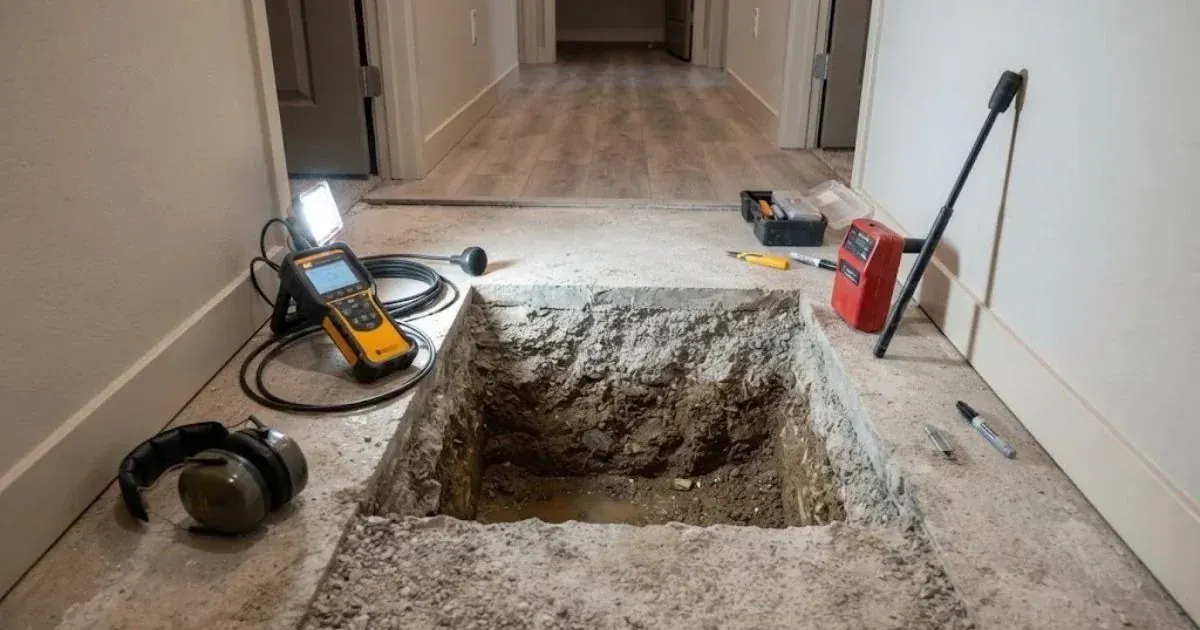
Slab leak repair in El Mirage, AZ means fixing a water line that has failed in or under the concrete foundation of a home. If you suspect one, shut off the main water valve and call our 24/7 line, because water under a slab can undermine flooring and drive up the bill every hour.
Not every damp floor is a slab leak, and not every home has pipes under the concrete. The first job is to confirm what you have, then choose the repair that fits the pipe, the location, and your plans for the house.
If you are not sure yet whether the problem is in the slab at all, leak detection is the step that comes first. If the leak is in the yard, that is a different fix, covered under water line repair.
Signs you should act today
Water you cannot see can still do real damage. Pooling under flooring, a soaked baseboard, or a floor that feels hot in one spot deserves a call the same day.
- Close the main water valve to stop the loss, then open one faucet to relieve pressure.
- Keep your feet off a hot or wet spot, and keep children and pets away from it.
- Lift rugs and move electronics off wet flooring.
- If water is rising along walls or near outlets, switch off power to that area at the breaker if you can do so dry.
- Call the 24/7 line and tell the plumber where the floor feels warm or damp.
What a slab leak feels and sounds like
Slab leaks hide, but they do leave evidence. These are the signs that homeowners notice most often.
A warm or hot patch on the floor
A leak in a hot water line can heat the concrete above it. The spot may be small and move with the pipe route.
Running water with every fixture off
A faint hiss or trickle at night, when the house is quiet, can mean pressurized water escaping.
A meter that will not sit still
If the dial moves with everything off and the yard line is ruled out, the house piping is the next suspect.
Damp carpet, lifted tile, or cracked grout
Water pushed up through the slab can swell flooring or loosen tile.
A high bill with no change in habits
A slow leak adds up month after month before any damage shows.
Do El Mirage homes have pipes under the slab?
Most homes in El Mirage date from the 2000s boom, and the median home was built around 2004 according to Census-based data. Many homes of that era in the Phoenix area sit on a concrete slab rather than a raised floor. How the pipes were routed in your particular house is not something a public record tells us.
That is why the plumber confirms it on site. In some slab homes, supply lines run in the attic or walls and only drain lines sit in the concrete. In others, supply lines run under the slab. Ask the plumber what they find in yours before you agree to any repair.
How the plumber confirms the leak is in the slab
The goal is to prove the leak location before anyone breaks concrete.
Rule out the easy suspects
The plumber checks fixtures, the water heater, the toilet fill valves, and the irrigation side. A leak that looks like a slab leak is often a running toilet.
Isolate the pipes
Shutting off sections of the system and watching the pressure or meter shows which line is losing water.
Listen
An acoustic device on the floor picks up the sound of water escaping a pipe. Concrete, tile, and background noise can mask it.
Add heat or gas if needed
Thermal imaging can show a warm line, and tracer gas can mark a small leak in an isolated pipe.
Mark and decide
The plumber marks the likely area, explains how sure the result is, and lays out repair choices with a clear price first.
Repair options and how they compare
There are three common routes. Which one makes sense depends on how many leaks the line has, how old it is, and what the floor above looks like.
Fix the pipe in place
- Spot repair: the plumber opens the floor above the leak, repairs or replaces that section, and patches the concrete.
- Lining or coating: a coating inside the pipe can seal small leaks in some lines. It is not suited to every pipe or every damage.
- Best when there is one clear leak and the rest of the line is in decent shape.
- Trade-off: you may be back for a second leak if the pipe is aging.
Reroute around the slab
- Rerouting abandons the leaking line and runs new pipe through the attic or walls.
- It avoids breaking concrete but opens walls and ceilings instead.
- Best when a line has leaked more than once, or when flooring is costly to remove.
- Trade-off: more drywall repair and painting, and the old line stays in the ground.
Hot spot on the floor?
Shut the main valve, then call. A plumber can confirm whether it is the slab or something simpler.
Symptom, likely cause, and what the plumber does
| What you notice | Likely cause | What the plumber does |
|---|---|---|
| Hot spot on the floor. | Leak in a hot water line. | Isolate the hot line, test pressure, and use thermal imaging to mark the area. |
| Sound of water at night. | Pressurized leak somewhere in the supply system. | Use listening gear on floors and walls to narrow the location. |
| Wet carpet at a wall edge. | Leak, or a drain or appliance overflow. | Check fixtures and appliances first, then test the lines. |
| Meter runs, yard is dry. | Leak inside the house piping. | Run an isolation test to decide between slab, wall, or attic. |
| Cracked tile with damp grout. | Water pressing up from below, or old settlement. | Test for leaks and look at whether the cracks are growing. |
Why a slab leak happens in the first place
Pipes in concrete fail for a few common reasons. Rubbing against rough concrete or gravel as the pipe expands and contracts can wear through the wall. Corrosion from the inside or outside can thin the metal. A poor joint from the original install can open up over time.
Hard water may add to the wear on some parts of a plumbing system. The city's 2024 water quality report lists hardness from 4 to 9 grains per gallon with an average of 7. That mainly matters for scale on heaters and fixtures. Whether it contributes to a leak in a specific pipe depends on the pipe, so the plumber should tell you what they see.
Ground movement can stress pipes as well. Groundwater pumping has caused subsidence and earth fissures in parts of Maricopa County, according to the Arizona Geological Survey. That is a county-wide note and not a finding about El Mirage. Ask the plumber if the pattern of damage suggests settlement.
What the repair work looks like
For a spot repair, the plumber typically cuts a small section of floor above the leak, removes the broken concrete, and exposes the pipe. The leaking section is replaced, the area is tested, and the concrete is patched. Flooring over the opening may need replacement, and matching an old tile or plank is not always possible.
For a reroute, new pipe is run through the attic or walls to the fixtures. The old line is capped. This often takes longer, but it can mean less noise and no concrete dust inside the house.
Ask the El Mirage building department whether the work needs a permit. The city's rules for a specific job are best confirmed with them, and the plumber can tell you what is typical.
When repairing the slab is not the best choice
If a line has leaked more than once, a patch may not hold your budget for long. A reroute or a repipe of that branch can cost less over time than another round of concrete work.
Ask your plumber to compare the options in writing. See repiping for how a whole-house or partial replacement is handled.
A plan for the first day
Do these before the plumber arrives and the visit will go faster.
- Read the meter with every fixture off, write down the time, and read it again later.
- Shut off the main valve if the meter is moving fast or water is visible.
- Mark any warm or damp areas on the floor with painter's tape.
- Photograph damaged flooring, baseboards, and walls with the date visible.
- Call your insurance agent to ask how your policy treats leak detection and access costs.
- Gather your water bills from the last few months to show the pattern.
What shapes the cost of a slab leak fix
Slab leaks vary more than most plumbing jobs. A clear price comes before work starts, built from what the plumber confirms about the pipe and the access.
Homeowners insurance often covers sudden and accidental water damage, and some policies cover the cost of getting to a leaking pipe. The pipe itself is usually treated as wear and tear. Read your policy and ask your agent before you file.
Want the real number? Call the 24/7 line and tell the plumber what you have noticed. (623) 301-9042
Frequently asked questions
Yes. The 24/7 emergency line is answered all night, on weekends, and on holidays. Shut the main valve first, then call so the plumber can plan the visit.
No. Water keeps escaping until the pipe is repaired or rerouted. The leak can slow or change direction, but the damage keeps building.
For a spot repair, yes, in a small area. For a reroute, the plumber opens walls or ceilings instead. Ask the plumber to compare both and explain what each means for your flooring.
It can be hard to tell at first. A puddle at the base of a heater that sits on the slab may come from the tank, its connections, or the pipe below. The plumber checks the heater first, then tests the lines. See water heater repair if the tank is the source.
Contractors who do plumbing work need an Arizona Registrar of Contractors license. You can verify one with the ROC Contractor Search tool at roc.az.gov before you sign anything.
Yes, the same dispatch line covers neighboring towns. See the Peoria plumber page for more.
Question not answered here? Call (623) 301-9042
Sources and code notes
Code reference: El Mirage follows the 2018 International Plumbing Code (IPC) and the 2018 International Fuel Gas Code (IFGC). Ask the El Mirage building department which rules and permits apply to your job. Hardness figures come from the City of El Mirage 2024 water quality report.