Water softener installation in El Mirage, AZ is a plumbing job that adds a treatment tank to your main water line so that hard minerals are swapped out before the water reaches your fixtures. Before you buy one, it helps to know what your water actually contains, what a softener changes, and what it asks of you in return.
The city's 2024 water quality report lists hardness from 4 to 9 grains per gallon, with an average of 7. Hardness is mostly calcium and magnesium, and it leaves white crust on faucets, spots on glass, and scale inside water heaters. Check the latest report on the city website, since the numbers can change from year to year.
A plumber can help you size and place a system, and a softener is a plumbing installation job like any other. If scale is already eating into your heater, see water heater repair for what that looks like.
What hard water does around the house
Hardness shows up in small ways first. These are the signs people in the area mention most.
White crust on faucets and showerheads
Minerals stay behind as water dries. It wipes off early on and gets harder to remove over time.
Spots on glasses and dishes
Dishwashers and glass shower doors show the film first.
Scale inside the water heater
Minerals settle at the bottom of a tank and coat heating parts. Over time that can make a heater noisy or less efficient.
Slow flow at aerators
Tiny screens in faucet tips clog with mineral bits.
Stiff towels, dull laundry
Some people notice that soap works differently in hard water.
Reading the city's numbers
El Mirage water comes from groundwater, supplied by nine city wells. The city's 2024 water quality report lists hardness between 4 and 9 grains per gallon, with an average of 7. That is moderately hard to hard water by common household scales.
Your tap may fall anywhere in that range, depending on which wells feed your part of town. The same report suggests 7.5 grains as a setting for softeners. A plumber can confirm the number for your home with a test kit.
A water report is a snapshot. Read the latest one before you buy, and ask city customer service if you want to know which wells serve your street.
Do you actually want a softener?
Softeners are not right for everyone, and a good plumber will say so. Here is the honest picture.
Reasons people install one
- Less scale on fixtures, glass, and shower doors.
- Less mineral buildup inside the water heater and pipes over the years.
- Soap and shampoo lather differently, which some households prefer.
- Cleaning gets easier on tile, tubs, and faucets.
Reasons people skip one
- Softeners need salt, and someone has to haul and add the bags.
- Many units drain brine during regeneration, and some areas limit or prohibit that discharge.
- Softened water can feel slick to some people, and some do not like the taste.
- A softener is another machine that can fail and need service.
- At the lower end of the city's range, the benefit may be small.
What a softener asks of you after install
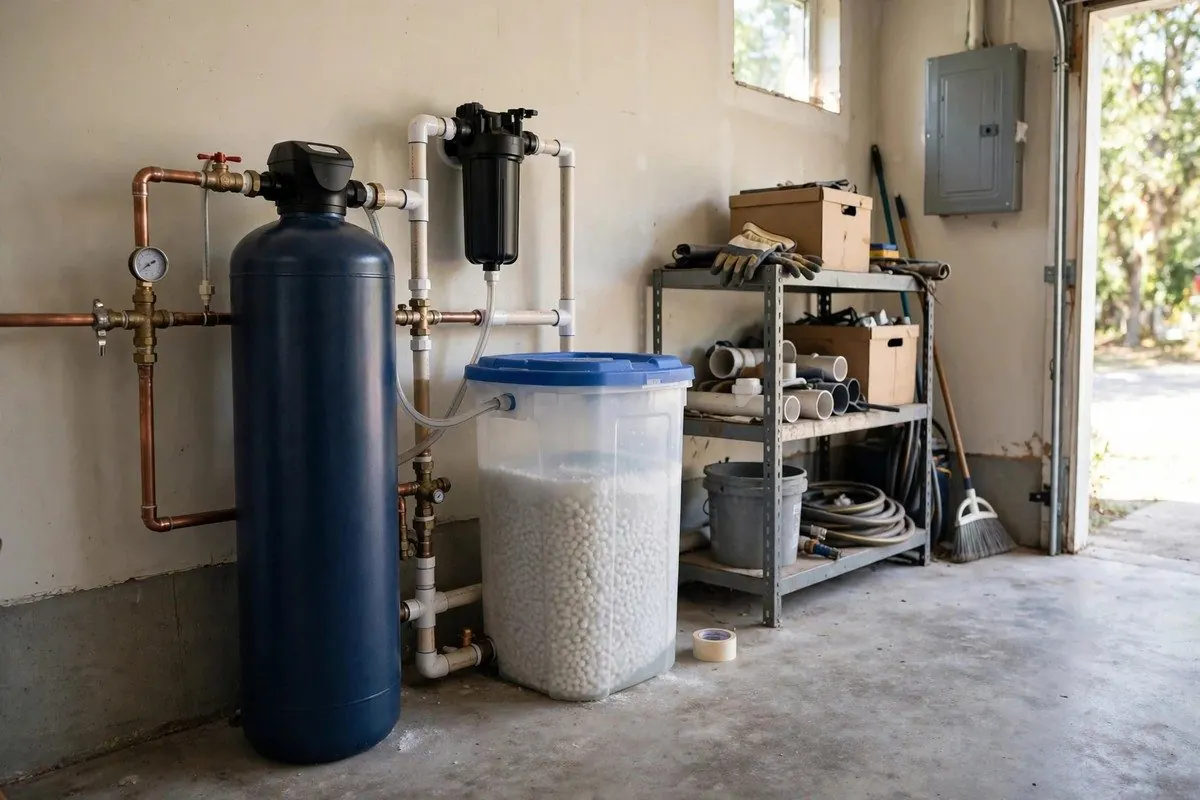
A salt-based softener holds a bed of resin beads that trap hardness minerals. Every few days it flushes itself with a salt brine to recharge. That means you will refill the brine tank with salt on a regular schedule, and you should check it for salt bridges, which are crusted layers that stop it from dissolving.
The unit also uses water to regenerate, and the brine goes to a drain. Before install, ask the El Mirage building department whether any rules apply to where the drain line goes or whether the job needs a permit.
Some households prefer a salt-free conditioner. These units change how minerals behave instead of removing them. The results differ from a true softener, so ask the plumber what each type can and cannot do.
Not sure you need a softener?
Tell the plumber what you see on your fixtures and glass. Sometimes a smaller fix is the better answer.
Softening versus filtration
These two words get mixed up. They solve different problems, and many homes need only one.
| System | What it targets | What it does not do |
|---|---|---|
| Salt-based softener | Hardness minerals like calcium and magnesium. | It does not act as a general filter for taste or odor. |
| Salt-free conditioner | Changes how minerals form scale. | It does not remove minerals, so water is still hard. |
| Carbon filter | Taste and odor from chlorine and some chemicals. | It does not soften water. |
| Sediment filter | Sand, silt, and rust flakes. | It does not touch dissolved minerals. |
| Reverse osmosis at one tap. | Many dissolved solids for drinking water. | It treats one tap, not the whole house, and it wastes some water. |
How the plumber plans an install
Test the water
A hardness test gives a number to size the system against. The plumber also asks about household size and how much water you use.
Pick the spot
The unit sits near the main line, with a nearby drain and a power outlet. A garage or utility closet is typical. Outdoor hose bibs and irrigation are often left on untreated water.
Check the shutoff and pressure
The plumber confirms the main shutoff works before cutting any pipe.
Plumb it in with a bypass
A bypass valve lets you cut the softener out of the loop without shutting off the house.
Program and explain
The plumber sets the hardness number and the regeneration schedule, and shows you where to add salt.
Your softener is not working right
Common signs of trouble include spots returning on glass, a salt tank that never gets lower, or water that suddenly feels hard again. A salt bridge, a stuck control valve, or a clogged injector can each cause these.
A plumber can check the settings, clean the brine tank, and test the water coming out of the unit. Resin beads wear out over time, and replacing them is not always worth it on an older unit. Ask for the option to compare repair against replacement.
Before you sign a contract
Salespeople at the door push these systems hard. Use this list to slow things down.
- Read the city's latest water quality report and write down the hardness range.
- Ask what the salt, water, and service needs will be each month.
- Ask where the drain line goes and what rules apply in your part of town.
- Ask whether a smaller, simpler option, such as a point-of-use filter, would solve your actual complaint.
- Get the price in writing before work starts.
- Check that the company holds an Arizona ROC plumbing license through the Contractor Search tool at roc.az.gov.
What softened water does not change
A softener will not fix low pressure, a smell from drains, or a heater that has failed. It also will not make water into something different from what the city supplies. If you have questions about what is in your water, read the city's report or ask the Water Services Division.
We make no health claims here. If a medical concern is behind your question, talk to your doctor.
What drives the cost of a softener project
The price depends on the equipment, the plumbing needed, and the ongoing costs after the install. A clear price comes before any work starts.
Homeowners insurance does not usually cover the cost of installing a softener. A softener that leaks and floods a room may be treated as sudden and accidental damage, but read your policy and ask your agent.
Want a real number for your home? Call and describe your water and the spot you have in mind. (623) 301-9042
Frequently asked questions
The city's 2024 water quality report lists hardness between 4 and 9 grains per gallon, with an average of 7. Check the latest report, since the numbers can change.
Not necessarily. Many homes live with hard water and clean fixtures with vinegar or descaler. A softener helps most if scale is hurting your appliances or you are tired of cleaning it.
Properly set units add a small amount of sodium, and some people notice the taste. Many keep a separate tap for drinking. Ask the plumber about the options.
It can slow new buildup, but it does not remove scale that is already there. Flushing the tank helps, and an old heater may need replacement. See water heater replacement if yours is failing.
Often yes. The plumber checks the control valve, brine tank, and resin. If the unit is old, they will talk through whether repair or replacement makes more sense.
Yes. Hardness varies by neighborhood water system, so the plumber tests the water at your home. See the Surprise plumber page for more on that area.
No, but it adds more fittings that can drip. If your meter runs with everything off, start with leak detection. Then decide about treatment.
Yes. A filter and a softener solve different problems. A plumber can install either one alone or both, and can explain which fits what you want to fix.
Question not answered here? Call (623) 301-9042
Sources and code notes
Code reference: El Mirage follows the 2018 International Plumbing Code (IPC) and the 2018 International Fuel Gas Code (IFGC). Ask the El Mirage building department which rules and permits apply to your job. Hardness figures come from the City of El Mirage 2024 water quality report.