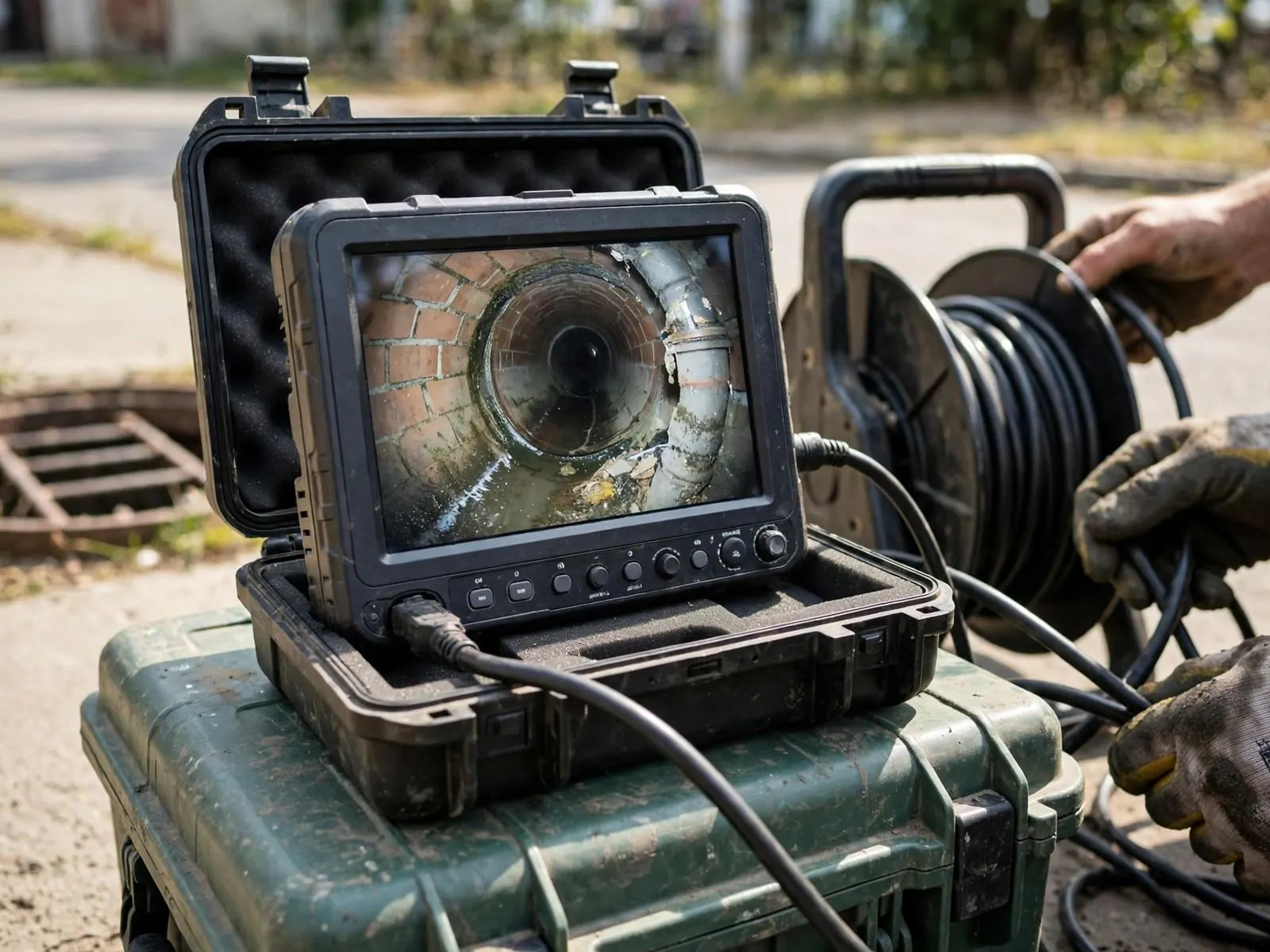
A sewer inspection in El Mirage, AZ means feeding a small waterproof camera into the home's sewer line to see its condition. The plumber watches a live view of the pipe walls, joints, and any buildup or damage. It is a planned visit, not an emergency repair, though you can schedule it through the same 24/7 line.
People usually book an inspection for one of three reasons. They are buying or selling a home, a line keeps clogging after cleaning, or they want to know the pipe's condition before spending on a repair. This page explains what a camera can show, what it cannot, and how to get a useful result.
If sewage is backing up right now, that is a cleaning job first. Read about sewer line cleaning and call the line.
What to do and what not to do before the camera visit
A little preparation makes the visit shorter and keeps everyone safe.
- Stop running water and flushing if drains are slow or backing up.
- Do not pour chemical drain cleaners into the line, because they can splash on the plumber and the camera.
- Find the cleanout cap if you know where it is, and clear space around it.
- Keep children and pets away from any area with sewage on the floor.
- Write down when the problem started and which drains are affected.
When a camera look is worth the money
A camera is not needed for every drain problem. These are the situations where it usually pays off.
Buying a home
A seller's drains may run today and still hide a crack or root intrusion. A camera look before closing gives you facts to negotiate with.
Repeat main line clogs
If a line has blocked more than once, a camera can show why instead of clearing it again blindly.
Before a big repair
Seeing the pipe first helps decide between cleaning, spot repair, and replacement.
After a backup
Once the line is open, a look inside can show whether the cause is still there.
Planning remodel or landscaping
Knowing the pipe's condition helps before heavy digging or a new addition.
What a sewer camera can show
The camera shows what the lens can see as it moves through the pipe. That usually includes cracks, offset joints, root intrusion, heavy buildup, a bellied or sagging section where water pools, and objects that are stuck. A plumber can also note the pipe material when it is visible.
These findings are useful because each one leads to a different decision. Roots at a joint, a long crack, and a mild sag are not the same problem, and the fixes differ.
What a camera cannot tell you
A camera result is a snapshot of one pass through one pipe. These lists keep expectations realistic.
A camera can usually show
- Visible cracks, breaks, and offset joints.
- Roots entering the pipe.
- Buildup, grease, and debris.
- Sags where water collects.
- Where the pipe changes direction or size.
A camera cannot reliably show
- A leak on the outside of the pipe that is not visible inside.
- The exact depth or location above ground without a separate locating tool.
- How long the pipe will last.
- Pipe beyond a blockage the camera cannot pass.
- Conditions in water-filled sections where the lens cannot see.
Buying a home soon?
Ask for the camera look before the inspection period ends, and call early so there is time to schedule it.
Reading the picture: what plumbers look for
Here is how common findings are usually read. The plumber should show you the footage and explain, not just give a verdict.
| What the camera shows | What it may mean | Typical next step |
|---|---|---|
| Roots threading through a joint. | A loose joint or small crack letting roots in. | Clear the roots, then decide on spot repair if they return. |
| A long crack along the pipe. | Pipe damage that can worsen. | Discuss repair options and how far the damage runs. |
| Water pooling in one section. | A sag or belly in the pipe. | Monitor, clean regularly, or repair if it causes repeat clogs. |
| Heavy grease or scale on the walls. | Buildup, not damage. | Clean the line, possibly with hydro jetting. |
| A pipe that stops the camera. | A blockage, collapse, or tight bend. | Clear if possible and look again, or discuss repair. |
| Clean walls and clear flow. | No visible problem on that pass. | No repair now. The clog may have been a one-time event. |
How a planned inspection goes
Because it is planned, you can prepare. The visit usually takes this shape.
Share the history
Tell the plumber about past clogs, repairs, and any home inspection notes. This guides where to look.
Find the entry point
The camera usually goes in through a cleanout. Without one, the plumber may need to use a fixture opening.
Pass the camera
The camera is fed down the line while the plumber watches the screen and notes anything unusual.
Mark what matters
Many plumbers can note the distance to a problem and, with a locating tool, mark it above ground.
Review the footage
You see what the plumber saw, and ask for a recording if you want one.
Talk about options
If something needs work, you hear the choices and get a clear price before work starts.
Before the plumber arrives
A little preparation makes the inspection more useful.
- Find the sewer cleanout, usually a capped pipe near the house, and make sure it can be reached.
- Gather any past plumbing invoices or inspection reports for the home.
- Write down which fixtures have been slow and how often.
- Avoid running large amounts of water just before the visit unless the plumber asks.
- If you are buying, ask the seller or agent about access.
- Decide whether you want a recording of the footage.
Locating the pipe and Arizona 811
Some inspections include locating where the pipe runs. A plumber can use a locating tool with the camera to mark a spot above ground. That tells you where to dig before any repair.
Arizona law requires you to contact Arizona 811 before digging. The service is free, and utilities have two full working days to respond. Ask the plumber whether a locate will mark your private sewer line, and do not assume it will.
Pipe lining and what an inspection says about it
Some homeowners ask about lining a pipe instead of digging it up. Whether lining suits a pipe depends on its condition, and the camera is what shows that. Ask the plumber what they see and why lining or replacement fits. Our sewer line repair page covers how that choice is usually made.
Older and newer homes in El Mirage
Census-based data puts the median El Mirage home at around 2004, with most built in the 2000s. Newer pipe is not automatically trouble-free, since poor joints and settling can happen at any age. A camera look is the only way to know your own line.
If your home is in a neighboring town, our Youngtown plumber page covers that area. The city or town can answer questions about local sewer service and permits.
What a camera inspection costs depend on
Inspection pricing varies with the job. The plumber should state the price before work starts.
Homeowners insurance usually covers sudden and accidental damage, not wear and tear or routine inspections. An inspection before buying is typically your own expense. Read your policy and ask your agent if you are unsure.
Want a real number for your inspection? Call the line, describe the home, and ask about same-day appointments when available. (623) 301-9042
Frequently asked questions
Requirements vary, so ask your agent or the El Mirage building department, but it is a sound precaution. A general home inspection usually does not look inside the sewer line, so a separate camera look fills that gap.
Only with a locating tool used alongside it. The camera alone shows what is inside the pipe, not where it sits underground. Ask the plumber how they would locate the problem.
Not reliably. It sees the inside of the pipe, so a leak at a crack may show as a crack but not as water escaping. Ground wetness or a high water bill call for leak detection.
Ask the plumber before the visit. Many plumbers can record footage, but do not assume it is included.
That usually means a blockage, a collapsed section, or a tight bend. The plumber can clear what is clearable and look again, or explain what the stop point suggests.
Maybe. It depends on the pipe's condition, which the camera shows. Ask the plumber whether lining or full replacement suits what they see.
Cleaning clears a blockage. An inspection looks at the pipe's condition. They are often done in one visit when a line keeps clogging.
Question not answered here? Call (623) 301-9042
Sources and code notes
Code reference: El Mirage follows the 2018 International Plumbing Code (IPC) and the 2018 International Fuel Gas Code (IFGC). Ask the El Mirage building department which rules and permits apply to your job. Dig-safety timing comes from Arizona 811, which the Arizona Corporation Commission oversees.