Hard water carries dissolved calcium and magnesium. When it is heated, some of those minerals drop out and form scale on heating surfaces and settle as sediment at the bottom of the tank. Scale slows heat transfer, so the heater works harder, and sediment can cause popping sounds, uneven heat and early wear.
The city's 2024 water quality report lists El Mirage hardness of 4 to 9 grains per gallon, averaging 7. That is enough to leave visible scale on fixtures and inside heaters over time. How fast it builds depends on your heater, how you use it and whether you treat the water.
Why does a heater scale up at all?
Calcium carbonate becomes less soluble as water gets hotter. In a gas tank, the burner heats the steel at the bottom, so scale forms right where the heat is strongest. In a tankless unit, the same minerals coat the narrow passages of the heat exchanger.
The scale itself acts like insulation. The burner or element has to run longer to push the same heat through, which can mean higher energy use and more stress on the parts.
What does scale sound and look like at home?
These are the everyday signs, roughly in the order most people notice them.
Popping or rumbling
Water trapped under sediment boils in pockets and bursts up. That is the classic tank sound.
Less hot water
Sediment takes up space in the tank, so the heater delivers less usable hot water than it used to.
White crust on fixtures
Chalky buildup on faucets and shower heads shows the water is leaving minerals behind everywhere.
Cloudy or gritty hot water
Flakes at the tap can come from sediment stirring up. Check aerators for grit.
Slow hot taps
Scale can narrow pipes and clog aerators, so hot flow drops while cold stays normal.
Rusty water or a wet base
If the tank's lining or fittings fail, you may see rust or moisture. That calls for a plumber, not more flushing.
Where scale shows up in a heater
| Part | What scale does | Typical response |
|---|---|---|
| Tank bottom | Sediment layer insulates water from the burner. | Drain or flush the tank on a regular schedule. |
| Heating element, if electric. | Crust makes the element work harder and can burn it out. | Replace the element, and consider treatment. |
| Anode rod | Rod wears down while protecting the tank steel. | Plumber inspects and replaces it if worn. |
| Drain valve | Sediment can clog it and make draining slow. | Replace the valve if it will not pass sediment. |
| Tankless heat exchanger. | Scale narrows passages and triggers errors. | Descale following the maker's directions. |
| Relief valve | Mineral crust can stop it from sealing. | Have a plumber test or replace it. |
Want a plumber to look at it?
Call the 24/7 line, describe what you found and hear a clear price before work starts.
What you can do yourself, and where to stop
Some upkeep is reasonable for a homeowner. The rest belongs to a licensed plumber.
- Read the heater's manual for the maker's drain or flush interval and follow it.
- Drain a few gallons from the tank's drain valve into a bucket and look for grit or cloudiness.
- Unscrew faucet aerators and shower heads and soak them to clear scale.
- Check around the tank base for dampness or rust streaks, and tell a plumber if you see them.
- Do not remove the relief valve or tamper with gas controls yourself.
- If the drain valve does not flow, stop and call a plumber instead of forcing it.
- Ask whether your heater's anode rod should be inspected.
Treat the water or live with the scale?
A softener is not the only choice. It is the one that attacks the cause.
Living with the hardness
- No equipment cost up front.
- You commit to regular tank draining or tankless descaling.
- Fixtures and appliances keep collecting scale.
- Heater life may be shorter than in softer water.
Adding treatment
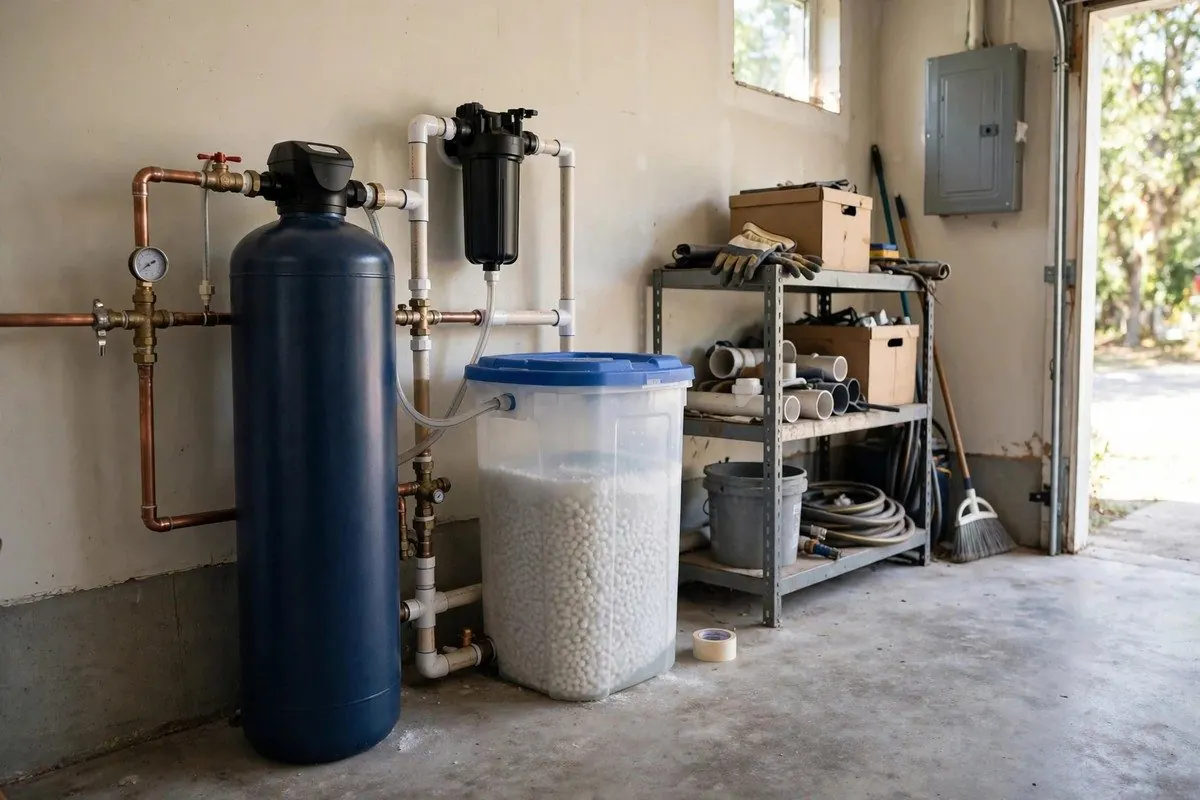
- A softener removes much of the hardness before it reaches the heater.
- Needs salt or other media and periodic upkeep.
- Less scale on fixtures, shower glass and appliances.
- Setup and drain connections must be done correctly.
When scale means repair or replacement
Scale does not always mean the end. A tank that is only noisy can often be drained and flushed back to normal. If the drain valve is clogged or a part has failed, a water heater repair may be enough.
A tank that leaks from the body cannot be saved, no matter how well you flush it. When the heater is old, noisy and low on hot water, price a replacement against more repairs, and ask the plumber for an honest read on how much life the tank has left.
Scale can hide leaks too
Mineral crust around fittings can hide a slow weep. A white or green crust at a connection is a sign that water has been seeping out for some time.
If your water bill has climbed with no change in use, a plumber can run a leak detection check. Ask utility billing to verify the meter read as well.
What the El Mirage numbers mean for your tank
The city's 2024 report lists hardness of 4 to 9 grains per gallon with an average of 7, and the same report recommends 7.5 grains for softener settings. If you add a softener, ask the installer to set it from your own water, then check the latest report for changes. Your tap may sit anywhere in that range.
Most homes in town date from the 2000s boom, with a median build year around 2004 in Census-based data. Original heaters from that time may have been replaced by now, but any tank that has run for years on this water deserves a look. Ask the plumber to look at the drain valve and anode rod on any older tank, and not to assume it is fine.
Water is not the same next door. Youngtown's water comes from EPCOR, whose 2025 report for Sun City and Youngtown lists 7 to 11 grains per gallon and says it does not treat for hardness. Anyone comparing notes with a friend in Youngtown or Peoria should check that town's own report first.
Frequently asked questions
Follow the maker's interval. Many recommend at least once a year, and some suggest more often in hard water. If you have never drained it, sediment may be thick and the drain valve may clog, so a plumber may be the safer choice.
Do not pour vinegar into a tank heater without the maker's approval. Acid can harm some parts. A normal drain and flush, and a water softener for the long term, are safer routes.
Manufacturers vary. Some warranties exclude damage from lack of maintenance or untreated hard water. Read the warranty terms and keep records of draining or service.
Many people notice softened water feels different on skin and soap rinses off more easily. That is normal and not a sign of a problem. Talk to the installer about the setting if it bothers you.
The city's 2024 water quality report recommends 7.5 grains for softener settings. Use that as a starting point and have the installer confirm it against your own water. Check the newest city report before you set anything.
Question not answered here? Call (623) 301-9042
Sources and code notes
Code reference: El Mirage follows the 2018 International Plumbing Code (IPC) and the 2018 International Fuel Gas Code (IFGC). Ask the El Mirage building department which rules and permits apply to your job. Hardness figures come from the City of El Mirage 2024 water quality report.