
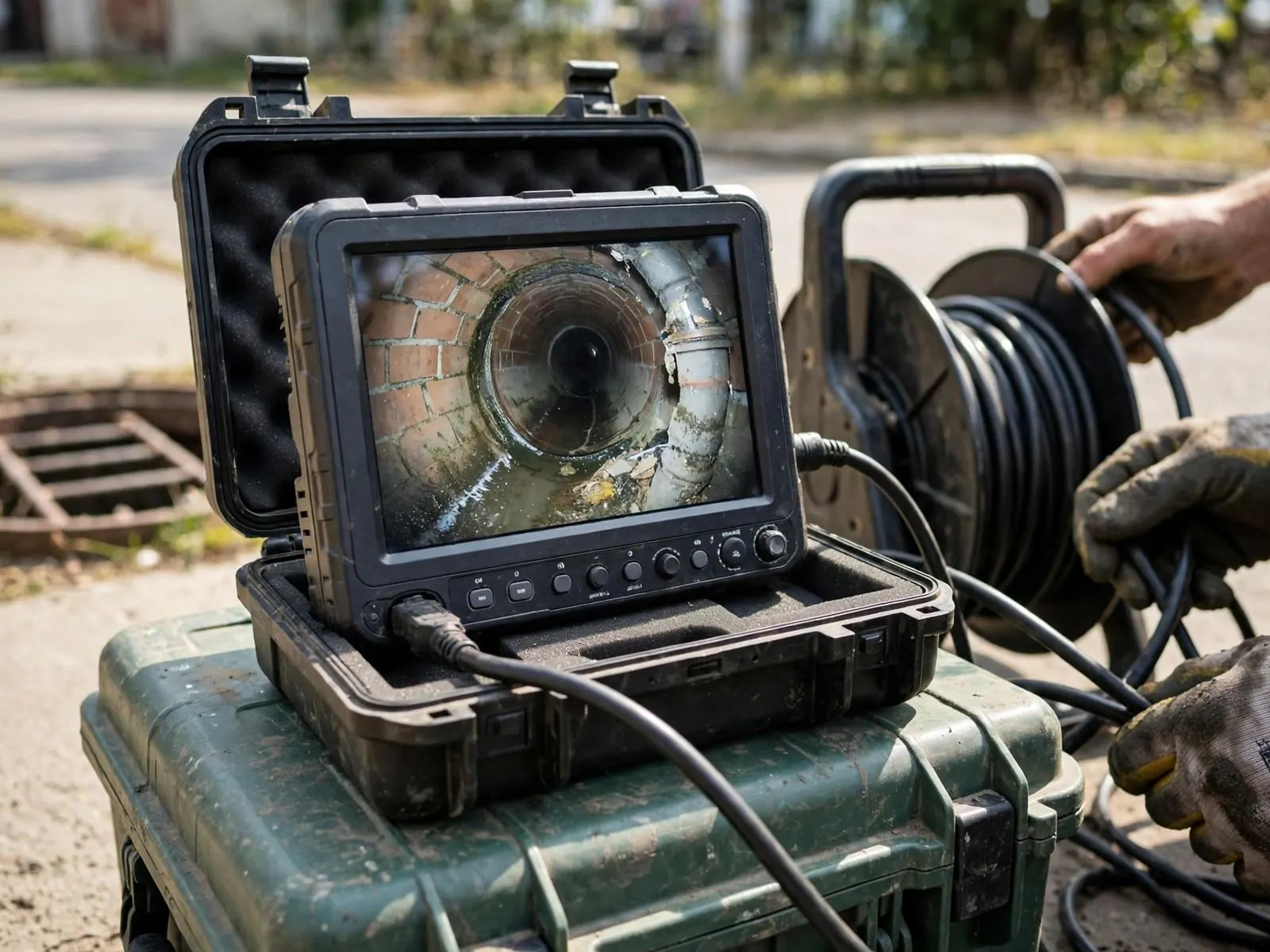
A sewer camera inspection shows the inside of your main drain line. The plumber feeds a waterproof camera through a cleanout and watches a live video of the pipe. It can reveal roots, cracks, broken or offset joints, sags that hold water, grease buildup, and blockages, along with an estimate of where each problem sits.
Get one when drains back up more than once, before you buy a house, before you spend money on a repair, or after cleaning that did not last. Ask first whether your home is on a city sewer or a septic system, because the inspection and the follow-up differ.
What the camera can and cannot show
| Finding | What it looks like on screen | What it usually means | Limits |
|---|---|---|---|
| Tree or shrub roots. | Fine threads or thick mats entering at joints. | Roots found a gap and keep growing. | The camera shows roots, not which tree. |
| Cracked pipe | A line or gap along the wall. | Ground movement, age or damage. | Hairline cracks can be hard to see. |
| Offset joint | A step where pipe ends meet. | Sections shifted apart. | It may look worse or better than it acts. |
| Belly or sag. | Standing water in a low spot. | Pipe has settled, so waste collects. | Water can hide cracks below the surface. |
| Grease or scale. | Rough, coated walls that narrow the pipe. | Buildup that cleaning may remove. | Camera cannot tell how soft the buildup is. |
| Blockage | The camera stops at an obstruction. | A clog, a collapsed section or a foreign object. | It cannot see past the blockage. |
| Wrong material or transitions. | Different pipe types joined together. | Repairs or partial replacement in the past. | Records of past work may not exist. |
Is your home on city sewer or septic?
Do not assume. Ask before you book, because the two systems need different inspections.
City sewer connection
- The main line runs from the house to a connection in the street or an easement.
- The camera usually enters through a cleanout near the house.
- The utility may own part of the line, so ask where your responsibility ends.
- Repairs on the street side may involve the city.
- Excavation must be marked through Arizona 811 first.
Septic system
- Waste goes to a tank and drain field on the property.
- A camera can look at the line to the tank, but the tank and field need their own inspection.
- Pumping history and tank location matter.
- A clog may be in the tank, baffle or field and not the pipe.
- Ask the plumber what a camera can and cannot assess for your system.
When is a camera worth the visit?
Repeat backups
A drain that clogs again after cleaning may have a root, a belly or a crack that cleaning alone will not fix.
Slow drains in several fixtures
If a tub, a shower and a floor drain all slow at once, the problem is likely in the main line and not in one fixture trap.
Buying or selling a home
A recorded inspection of the sewer line before closing can turn up repairs that a standard home inspection does not cover.
Before a big repair
Video confirms where the damage is, so the repair covers the right section and not a guess.
Gurgling or sewer smell
Odors or noises can come from a venting problem, a dry trap or a partial blockage. The camera helps tell which.
After a repair
A second look shows whether the new section is aligned and the line is clear.
Want a plumber to look at it?
Call the 24/7 line, describe what you found and hear a clear price before work starts.
What happens during the inspection, step by step
Find the access point
The plumber looks for a cleanout, usually near the house, or pulls a toilet if none exists.
Clear the way if needed
A badly blocked pipe may need drain cleaning first, so the camera can pass.
Feed the camera
A flexible cable carries a small camera and light down the pipe while a screen shows the view.
Watch and mark
A locator in the camera head lets the plumber trace its position above ground, so a problem can be placed on the lot.
Record the video
Ask for a copy of the footage and for the problem points to be described in writing.
Review the options
The plumber explains what was seen, what needs action, and what can wait.
What to ask before you book
- Will I get the video and a written summary?
- Does the price include locating the problem on the lot?
- What happens if the camera cannot get past a blockage?
- Is the line on city sewer, and who owns which part?
- What do you recommend if you find roots, and what are the trade-offs?
- Can you describe repair options, not only the one you prefer?
- Is the price confirmed before work starts?
After the camera: the repair choices
Findings fall into groups. Light roots or buildup may respond to cleaning with a cutter or high-pressure water, and hydro-jetting is one method plumbers use for that. Cracks, breaks and bellies usually need a repair or replacement of that section.
For those, ask about sewer line repair options such as spot digging, relining and full replacement. Each has trade-offs in cost, disruption and how long it should last. A plumber can explain which fit your pipe and your yard.
Do not authorize a full replacement from one glance at the video. Ask to see the problem on screen and ask what happens if you wait.
Honest limits of a camera
A camera shows the inside of the pipe on the day it runs. It will not predict the next root intrusion, and it cannot see through standing water or past a blockage.
A clean video is good news but not a promise. If symptoms return, the line may need a second look after cleaning or after a rainy stretch.
Sewer questions that are specific to El Mirage homes
Census-based data puts the median El Mirage home at about 2004, and most homes date from the 2000s boom. That suggests newer lines for many homes, but it does not tell you your pipe material, whether it has settled, or what connection you have. A camera answers that for your lot.
We cannot say from here whether your property is on city sewer or septic, so ask your plumber and check your closing paperwork. If a utility owns part of the line, ask city customer service where the line ends and yours begins.
Before any digging for a repair, Arizona 811 requires a call, the service is free, and utilities have two full working days to respond. Ask the plumber who requests the marking and how that fits the schedule. If the repair needs a permit, ask the El Mirage building department.
Frequently asked questions
It depends on the length of the line, access and how clean the pipe is. A simple run is quick, while a blocked or long line takes more time. Ask the plumber for an estimate when you book.
Often yes. It can show roots, grease, a break or an obstruction. If the pipe is blocked solid, it may only reach the blockage and not see past it.
Many buyers choose one because a standard home inspection does not look inside the sewer line. It is optional, so weigh it against the age of the home and the seller's records.
It is a small flexible tool and is made for this work. A pipe that is already collapsed or badly cracked can be fragile, so tell the plumber about past problems.
Ask before you assume. Check your closing documents, look for a cleanout or a tank lid, and ask city customer service whether your address has a sewer connection. We do not know the answer for your lot, and the inspection plan depends on it.
Question not answered here? Call (623) 301-9042
Sources and code notes
Code reference: El Mirage follows the 2018 International Plumbing Code (IPC) and the 2018 International Fuel Gas Code (IFGC). Ask the El Mirage building department which rules and permits apply to your job. Dig-safety timing comes from Arizona 811, which the Arizona Corporation Commission oversees.