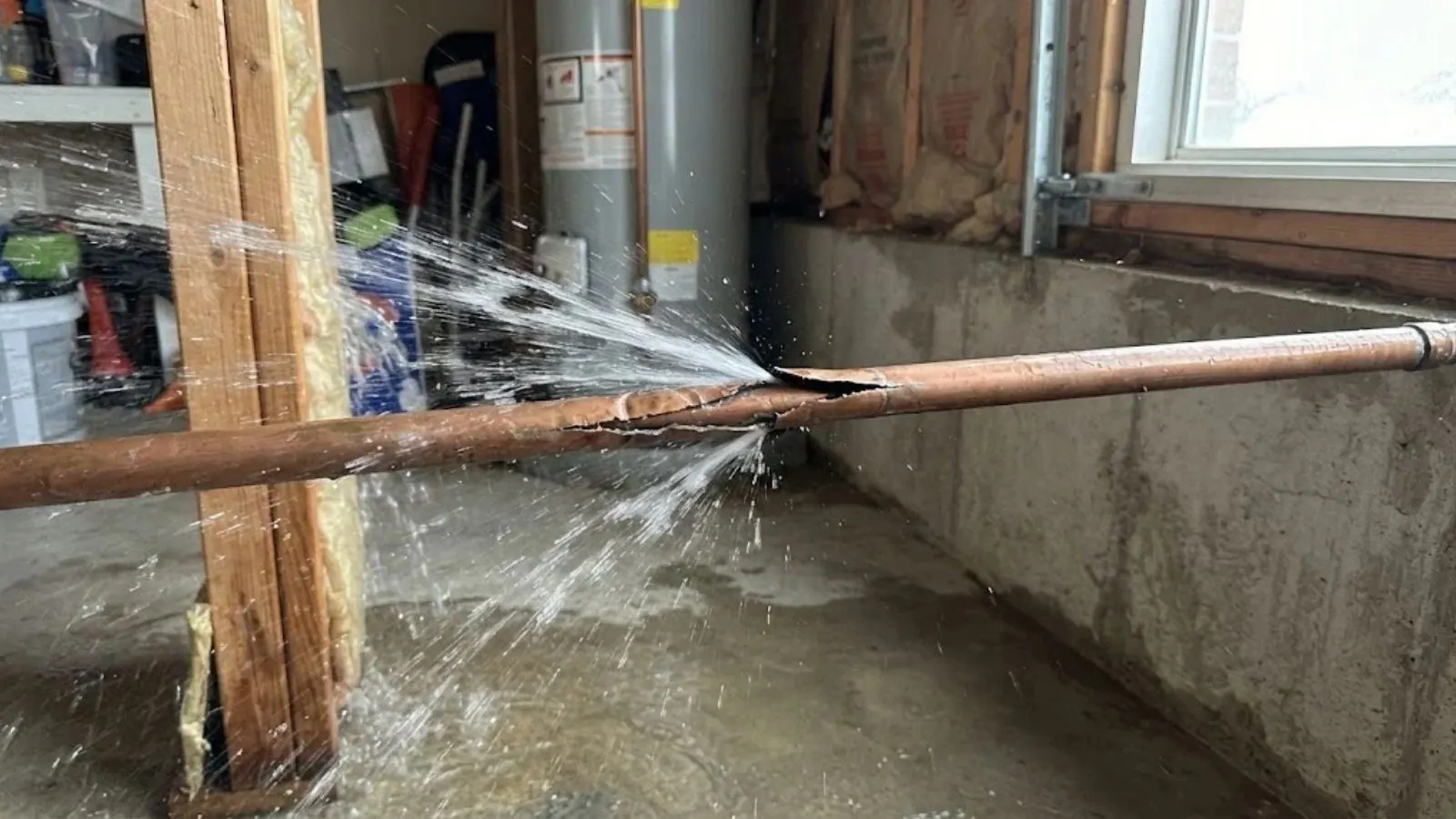
Your main water valve is the shutoff where the water line enters your home. Look near the front or side of the house at ground level, in a garage wall, a utility closet, or beside the water heater. Turn a round handle clockwise until it stops, or turn a lever a quarter turn so it sits across the pipe.
Then open a low faucet to drain the pipes and confirm the flow stops. If you cannot find the valve or it will not move, close the valve at the meter only if the city allows it, and call a plumber at once.
Where the valve usually hides
Builders put the shutoff in different places. These are the spots to check first, in rough order of how often people find it there.
Outside wall near a hose bib
Look at the front or side of the house for a pipe that rises from the ground or comes through the wall, often near a hose connection.
Garage wall
A pipe that enters the garage at shoulder height or lower, sometimes behind stored boxes. Clear a path now so you can reach it later.
Utility closet or laundry room
The line may enter where the water heater or softener sits. Follow the cold line from the heater back toward the wall.
Under a kitchen sink or in a pantry
Less common, but possible in some layouts. Check cabinet backs where a larger pipe comes through.
A ground box in the yard
That is usually the meter box. It often holds a shutoff on the utility side, which is a different valve from your house main.
The 60-second shutoff sequence
Stay safe first
If water is near an outlet, a breaker panel or an appliance plug, stay away from it and do not stand in the water. Turn off power at the breaker only if you can reach the panel dry.
Go to the valve
Use a flashlight if the area is dark. Move boxes, tools or plants that block it.
Turn it the right way
A round wheel closes clockwise. A lever closes when it is crossways to the pipe. Use steady pressure, not a jerk.
Open a low faucet
Open a tap at the lowest point of the house, such as a hose bib. That drains the water left in the pipes.
Check that the flow stopped
Watch the leak. If it keeps running after the pipes drain, you may have the wrong valve or a different source, such as the heater.
Call for help
Once the water is off, call a plumber. Burst pipes and a flooded floor need attention quickly, even when the flow has stopped.
Which type of valve do you have?
Two common valve styles behave differently, and the old one is the riskier to force.
Gate valve (round wheel handle)
- Turn clockwise to close, counterclockwise to open.
- Takes several full turns.
- Can seize from mineral buildup and rarely use.
- The stem can snap if forced.
- A good candidate for replacement if it feels stiff.
Ball valve (lever handle)
- A quarter turn closes it, with the handle crossways to the pipe.
- Fast and easy in an emergency.
- Less likely to seize, though it can stiffen.
- Easy to see the position at a glance.
- Often the better choice when a valve is replaced.
Want a plumber to look at it?
Call the 24/7 line, describe what you found and hear a clear price before work starts.
What if it will not turn or will not seal?
| Problem | Likely reason | What to do |
|---|---|---|
| Handle will not budge. | Scale or corrosion has locked the stem. | Do not use a pipe wrench or cheater bar. Call a plumber and consider the meter-side valve if the city permits. |
| Handle spins freely. | The stem has stripped or broken inside. | Stop turning it and call a plumber. |
| Water slows but does not stop. | The valve seat is worn or scaled. | Close it as far as you can and call. The valve likely needs replacing. |
| Valve leaks around the handle. | Packing nut is loose or worn. | Close the valve, and ask the plumber to repair or replace it. |
| Cannot find a valve at all. | Hidden behind finishes or in an odd place. | Check the meter box, and call a plumber to trace the line. |
A five-minute drill worth doing this weekend
- Find the main valve and confirm everyone in the household knows where it is.
- Clear a path to the valve and keep the area free of storage.
- Close the valve fully, then open it again, to check that it moves smoothly.
- Tape a note near the valve showing which way it closes.
- Find the shutoff under each sink and toilet, since these isolate a single fixture.
- Check that the water heater has its own shutoff valve on the cold line.
- Locate the meter box, and note its position in case you need to describe it.
Close the valve, then think about the damage
Shutting off water stops the flow but not the harm already done. Wet drywall, flooring and insulation can grow mold if they stay damp. Move belongings out of the wet area, mop standing water, and run fans if you can.
A burst pipe needs a repair, not only a closed valve. Burst pipe repair involves locating the break, cutting out the failed section and replacing it. Photograph the damage for your insurer before you clean up, and read your policy for what it covers.
Should you replace an old main valve?
If the valve is stiff, corroded or a gate type that has never been turned, ask a plumber about replacing it with a ball valve. A fast, reliable shutoff is cheap protection compared with a flooded house.
The work is simple when done during a calm visit, and it often fits alongside other plumbing installation work. Ask the plumber to price it before work starts and to check the pressure at the same time.
El Mirage water, weather and your shutoff
Water in El Mirage comes from the city's groundwater wells, and the 2024 water quality report lists hardness averaging 7 grains per gallon. Scale can stiffen a valve that is rarely used, so turn yours once or twice a year to keep it free.
Hard freezes are uncommon here. NOAA normals list a record low of 20F, so a frozen pipe is not a yearly worry, and flooding more often comes from a failed fitting, a heater tank or a supply line. On a rare cold night, knowing where the shutoff is still matters.
The meter valve is usually the utility's equipment. Ask city customer service whether you may operate it in an emergency before you try it.
Frequently asked questions
If the leak is at or near the heater, close its cold supply valve and turn off the power or gas control. Ask the plumber before you restart a heater that lost its water supply.
Open it slowly and watch for drips. Open a faucet first to let air out of the lines. If you see a new leak, close it again.
Avoid force. A stuck old valve can break and leave you with no way to stop the water. Call a plumber if it will not move with your hand.
Once or twice a year is common advice. Close it fully, open it fully, and check for drips at the handle.
It is not a regular concern. NOAA normals list a record low of 20F, and hard freezes are rare. Exposed hose bibs and pipes on an outside wall are the first places to protect on a rare cold night, so find your shutoff before one arrives.
Question not answered here? Call (623) 301-9042
Sources and code notes
Code reference: El Mirage follows the 2018 International Plumbing Code (IPC) and the 2018 International Fuel Gas Code (IFGC). Ask the El Mirage building department which rules and permits apply to your job. Hardness figures come from the City of El Mirage 2024 water quality report.