
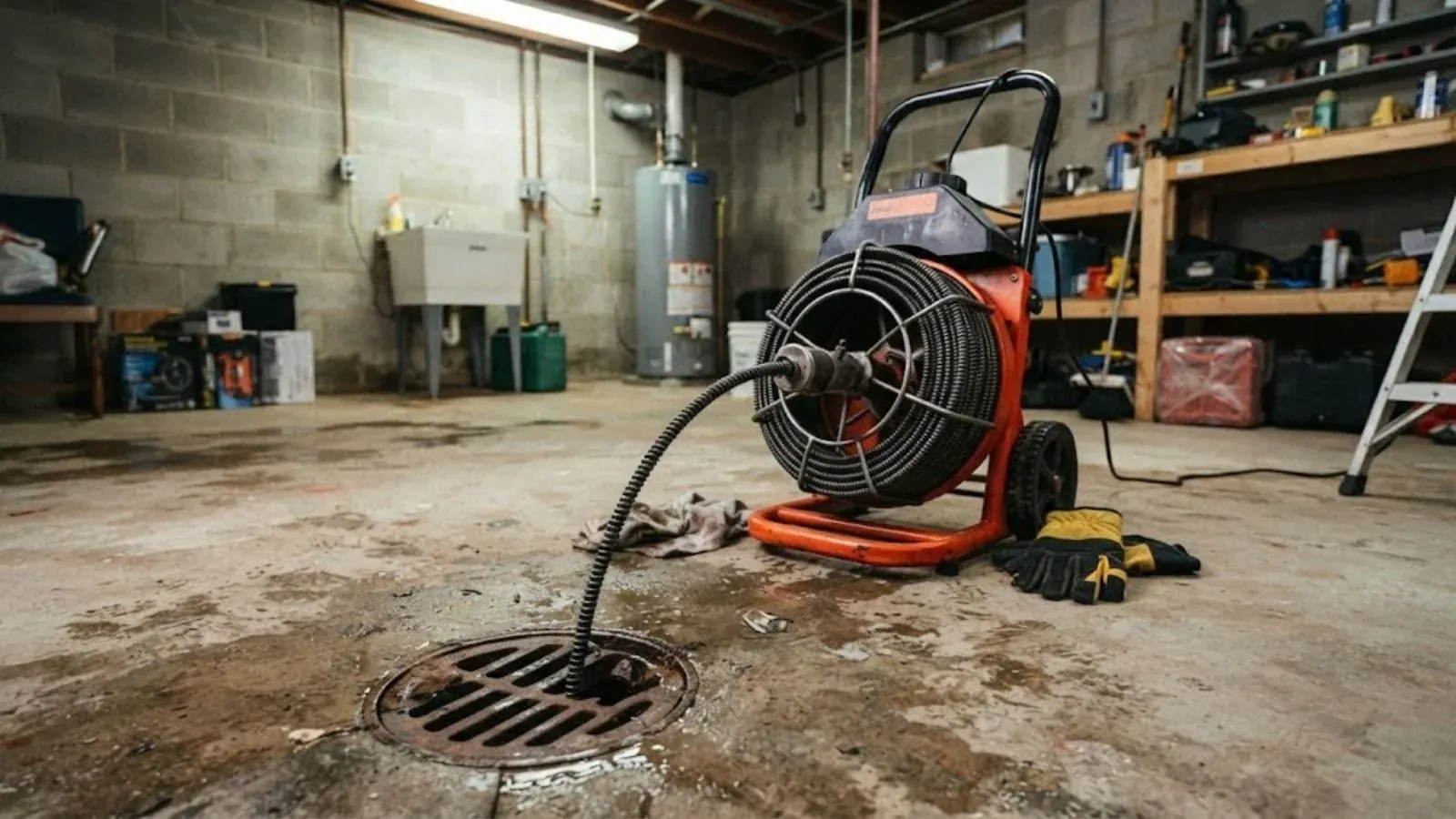
The storm drains in the street belong to the city, not to you, so do not try to open or clean them. What you can safely clear is on your own property: the grate of a yard drain or catch basin, the end of a downspout, a gutter and any shallow swale where leaves and dust collect. Pull debris by hand with gloves, rinse with a hose, and check that water leaves the area.
Anything underground, anything that smells like sewage, or any pipe you cannot see the end of is a job for a licensed plumber. The monsoon runs June 15 to September 30, so the best time to do this is before the middle of June.
Whose drain is it? Know before you touch anything
Ownership decides who is allowed to work on the drain. The table splits the common cases.
| What you are looking at | Usually who handles it | What you can do |
|---|---|---|
| Storm drain inlet in the street or gutter. | The city | Report a blocked inlet to the city. Do not open the grate or reach in. |
| Open channel, wash or retention area. | The city, an association or a property owner depending on location. | Ask the city who maintains it. Do not dump yard waste there. |
| Yard drain or catch basin on your lot. | You | Clear surface debris from the grate and flush with a hose. |
| Downspout and its underground pipe. | You | Clear the opening, and call a plumber if it backs up. |
| Sewer cleanout cap in the yard. | You, and the line beyond it. | Leave it capped. It is not a yard drain. |
| Anything that smells like sewage. | A plumber or the utility. | Stop using water and call. |
Why bother in a desert that gets so little rain?
NOAA normals for the Youngtown station list about 8.34 inches of rain in an average year, and the National Weather Service says the monsoon can bring 30 to 60 percent of the annual total. That means a lot of water in a few events, and drains sit unused for months beforehand. Dust, leaves and trash settle in them while nobody is watching.
The same weather service lists flash floods, lightning, microbursts and dust storms among monsoon hazards. A storm that drops its rain in minutes will find any blocked drain on your lot.
A simple off-season calendar
Do these in the cool months, when working outside is comfortable.
October to November
Walk the property after any rain and note where water pools or runs toward the house. Fix small grading problems while they are easy to see.
December to February
Clear grates, gutters and downspout openings. Flush each yard drain with a hose and watch how fast it clears.
March to April
Look for roots, cracks and settling along buried pipe runs. Call a plumber if flushing does not clear a drain.
May
Do a second flush and test every downspout with a hose. Fix anything that backs up or leaks before the season starts.
June 15
Monsoon season begins. Keep a weekly walk-around habit through September 30.
Want a plumber to look at it?
Call the 24/7 line, describe what you found and hear a clear price before work starts.
What you can safely clear yourself
These tasks stay on your own property and use no special tools.
- Wear gloves and closed shoes, and lift grates only if they are loose and meant to come off.
- Remove leaves, trash, sediment and dust from the grate and the shallow basin below it.
- Rinse with a garden hose and watch whether water drains away steadily.
- Clear gutters and the openings at the top and bottom of each downspout.
- Check that the end of each downspout directs water away from the foundation.
- Take photos before and after so you can show a plumber what you found.
Safe limits: what to leave alone
Never reach into a storm drain, climb into one or use a pressure washer to push debris down a city inlet. Storm drains can hold sharp objects and, after rain, fast water. Do not pour chemicals, paint or yard waste into any drain either, because the water from a storm drain often leaves the area untreated.
If you need to dig to find a buried pipe, contact Arizona 811 first. It is free by law, utilities have two full working days to respond, and the marks last 15 working days. Hand tools only within 24 inches of the marks.
When a yard drain is slow after you cleared it
If the grate is clean but water still pools, the buried pipe is probably restricted by silt, roots or a sag. A garden hose cannot reach that, and a household drain snake may not fit. A plumber can clear the line with a cable or high-pressure water, and may use a camera to see where it narrows.
Ask the plumber to confirm where the line goes before cleaning it. A yard drain and a sewer cleanout can look alike, and it matters which one you are working on. For standard cable work, see drain cleaning, and for heavy silt or roots, hydro jetting uses pressurized water.
Cost factors for professional cleaning
No dollar figures here. Call for a clear price before work starts.
Access
A clean, reachable cleanout is quick. A buried or covered drain takes longer to find.
Blockage type
Loose silt clears easily. Roots or a collapsed section are different jobs.
Pipe length
Longer runs and multiple downspout connections add time.
Camera inspection
Looking inside the pipe adds a step but shows what is actually wrong.
Repairs found
A crushed or sagging pipe may need excavation, which is a separate conversation.
El Mirage monsoon facts that affect your drains
NWS Phoenix says monsoon season runs June 15 to September 30. Dust storms are on the National Weather Service's list of monsoon hazards, so expect fine sediment to wash into any yard drain that has been sitting open. Plan a flush in May and another soon after the season ends.
The city's website lists a Stormwater page among its water resources, and the city's customer service office is the starting point for questions about street inlets. We could not confirm a city phone line or reporting form for blocked inlets, so ask customer service how to report one.
Arizona 811 applies to homeowners who dig. If you are trenching to replace a yard drain pipe, call before you start, because gas and utility lines can run through residential yards.
Frequently asked questions
No. Street inlets belong to the city and are not safe for homeowners to open. You can sweep leaves from the curb near the grate, but leave the grate and the pipe alone. Report a blocked inlet to the city.
No. A cleanout gives access to the sewer line from the house, while a yard drain carries rainwater. Do not pour water or debris into a cleanout, and ask a plumber if you are not sure which one you have.
Before monsoon season and again after it ends is a sensible schedule. If your yard collects a lot of dust or leaves, check it more often.
Stay out of fast-moving water, keep electricity away from standing water, and wait until it is safe. If water is entering the house, call the 24/7 line. Report street flooding to the city.
Total rainfall is low, about 8.34 inches a year in NOAA normals for the Youngtown station. The risk is the way it falls, since monsoon storms can deliver a large share in short bursts. A drain that works is cheap insurance against ponding, even in a desert.
Question not answered here? Call (623) 301-9042
Sources and code notes
Code reference: El Mirage follows the 2018 International Plumbing Code (IPC) and the 2018 International Fuel Gas Code (IFGC). Ask the El Mirage building department which rules and permits apply to your job. Dig-safety timing comes from Arizona 811, which the Arizona Corporation Commission oversees.